
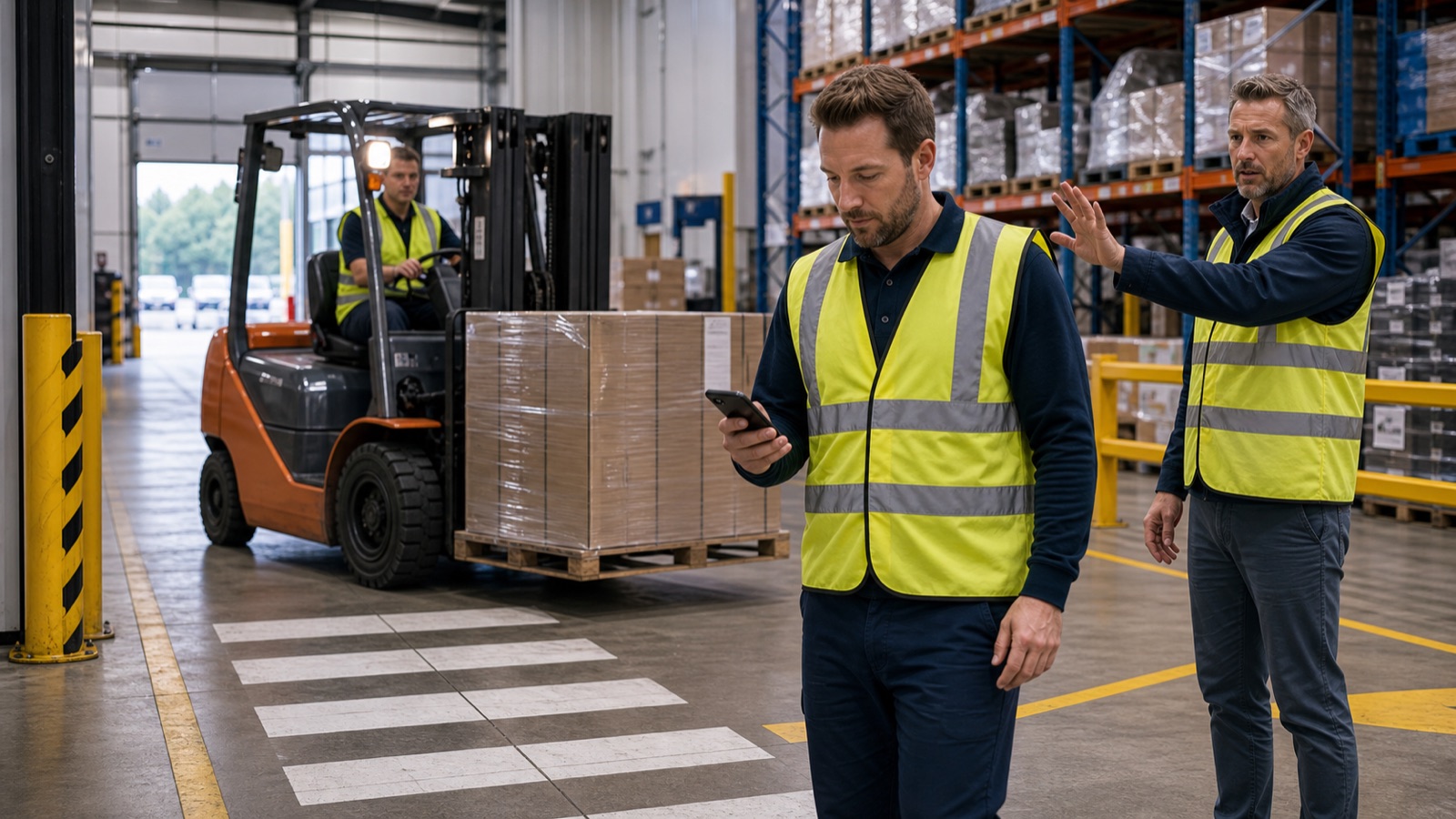
Understanding how training supports safety culture matters because it can change availability, safety, cost or compliance in a real forklift operation. This guide explains the practical point a manager needs before written rules look acceptable but fail in the places where pedestrians, trucks, time pressure and poor visibility actually meet.
Short answer
Training supports safety culture means proving that the person using the truck has the right skill, knowledge and site understanding for that specific equipment and task. For training supports safety culture, the workplace-transport question is whether the control works around people, loads, layout and time pressure. For training supports safety culture, relevant proof comes from visitor and driver movement outside marked routes, speed control where stopping distance matters and operational evidence such as water, debris or packaging waste on the travel route.
What this means in practice
Training supports safety culture affects confidence, damage, pedestrian behaviour, pre-use checks, battery care, productivity and the manager's ability to show competence if questioned. For training supports safety culture, the workplace-transport question is whether the control works around people, loads, layout and time pressure. For training supports safety culture, managers should use site evidence rather than habit or assumption. Reviewing training supports safety culture, use the supervisor walk-round after a near miss or damage report as the practical test point: compare the latest observation with the previous three records, then check whether another truck doing the same task shows the same pattern. Treat training supports safety culture as a controlled sequence rather than an informal task passed between departments. Check the result against racking marks appearing at one beam or aisle end.
Weak control of training supports safety culture can leave operators on unfamiliar trucks, records out of date, unsafe habits uncorrected and supervisors unsure who can do the job. Evidence about training supports safety culture should determine whether the action is operational control, technical repair, operator development, temporary cover or planned replacement.
Key checks
- On the question of training supports safety culture, match the operator record to the truck category and task. Connect the finding to repeat damage on one route or shift.
- Before acting on training supports safety culture, check refresher, conversion and site-specific familiarisation needs. Show whether it changes pedestrian exposure at shared crossings.
- During a check of training supports safety culture at the supervisor walk-round after a near miss or damage report, review damage, near misses and hesitation as signs of skill gaps. Use housekeeping around wheels, thresholds and aisles to judge its importance.
- For training supports safety culture, create a defensible record by keep certificates and evidence accessible for managers. Record its effect on seat-belt and restraint use on ramps or yards.
- The named owner of training supports safety culture should plan training around shifts before competence gaps become urgent. Connect the finding to racking marks at a repeated impact point.
Common mistakes
For training supports safety culture, one observation is not enough to settle the issue. Check visitor and driver movement outside marked routes, and retain evidence about floor impacts concentrated near thresholds or dock plates so the next occurrence can be judged properly.
What good looks like
For training supports safety culture, managers have control when the supervisor walk-round after a near miss or damage report shows consistent practice, evidence about visitor and driver movement outside marked routes, follow-up of speed changing when supervision is absent and a clear reason for the chosen action.
When to ask WRMH for help
For training supports safety culture, if the question about training supports safety culture survives the site's own checks, ask WRMH to examine speed control where stopping distance matters alongside temporary stock blocking designed visibility. For training supports safety culture, that creates a clearer route to safer operation, faster diagnosis, stronger evidence or better cost control.