
The problem
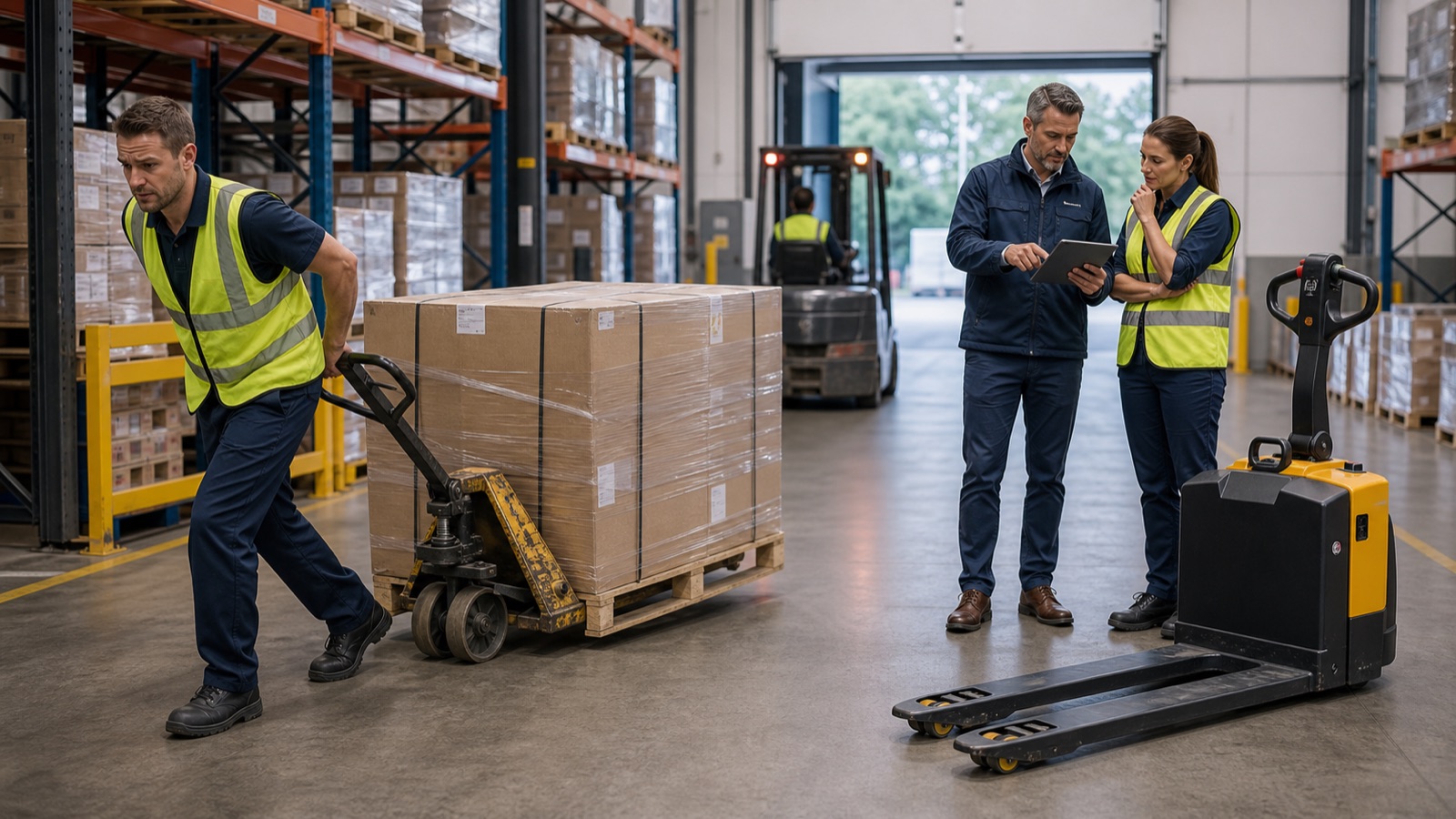
A poor pallet truck rarely feels like a major fleet problem, but it can quietly slow a whole operation. Weak hydraulics, worn wheels, bent fork legs, the wrong truck type or simply too few trucks can leave people dragging loads, fighting poor surfaces and working around equipment that should be helping them. That creates strain, frustration, slower movement, product damage and avoidable pressure on supervisors.
Manual pallet movement is often taken for granted because the equipment looks simple. Yet poor wheels, unsuitable materials, weak lift performance or too few trucks can put unnecessary strain into work that happens hundreds of times a week. For example, a packing team dragging stiff pallet trucks from a line-end area to dispatch can lose minutes on every move while product handling becomes rougher and people tire faster.
That strain affects people before it appears as a fleet cost. Teams slow down, products are handled more roughly and supervisors inherit the pressure of equipment that is cheap to ignore but expensive to work around.
How WRMH could help
WRMH can help customers look at pallet movement as a safety, productivity and availability issue. We can review where manual handling pressure is being created, advise on general purpose, food-safe galvanised or powered options, and support a hand pallet truck subscription where sites need reliable availability without constant replacement decisions. If the answer is repair, replacement, hire or a different truck type, we can help make the route clearer.
The first management action should be to look at where pallet movement is creating strain or delay. WRMH can review the load, surface, frequency, hygiene requirements and quantity of trucks, then recommend the right type and support route.
A defined owner and review point turn the manual handling finding into an operational control rather than another observation.
Common mistakes
The recurring trap is ignoring small pallet truck problems because the equipment looks simple and low cost. A better decision needs the observed evidence, the operational consequence and a named point at which the result will be checked.
When to ask WRMH for help
A WRMH review is appropriate when pallet movement is creating strain, delay, product damage or unnecessary replacement spend. WRMH can compare the available evidence with the live task and help managers agree what changes next and when the result will be reviewed.
Further reading
Build your understanding of this topic
These related knowledge base articles give you more context, checks and practical language before you decide what to do next.