
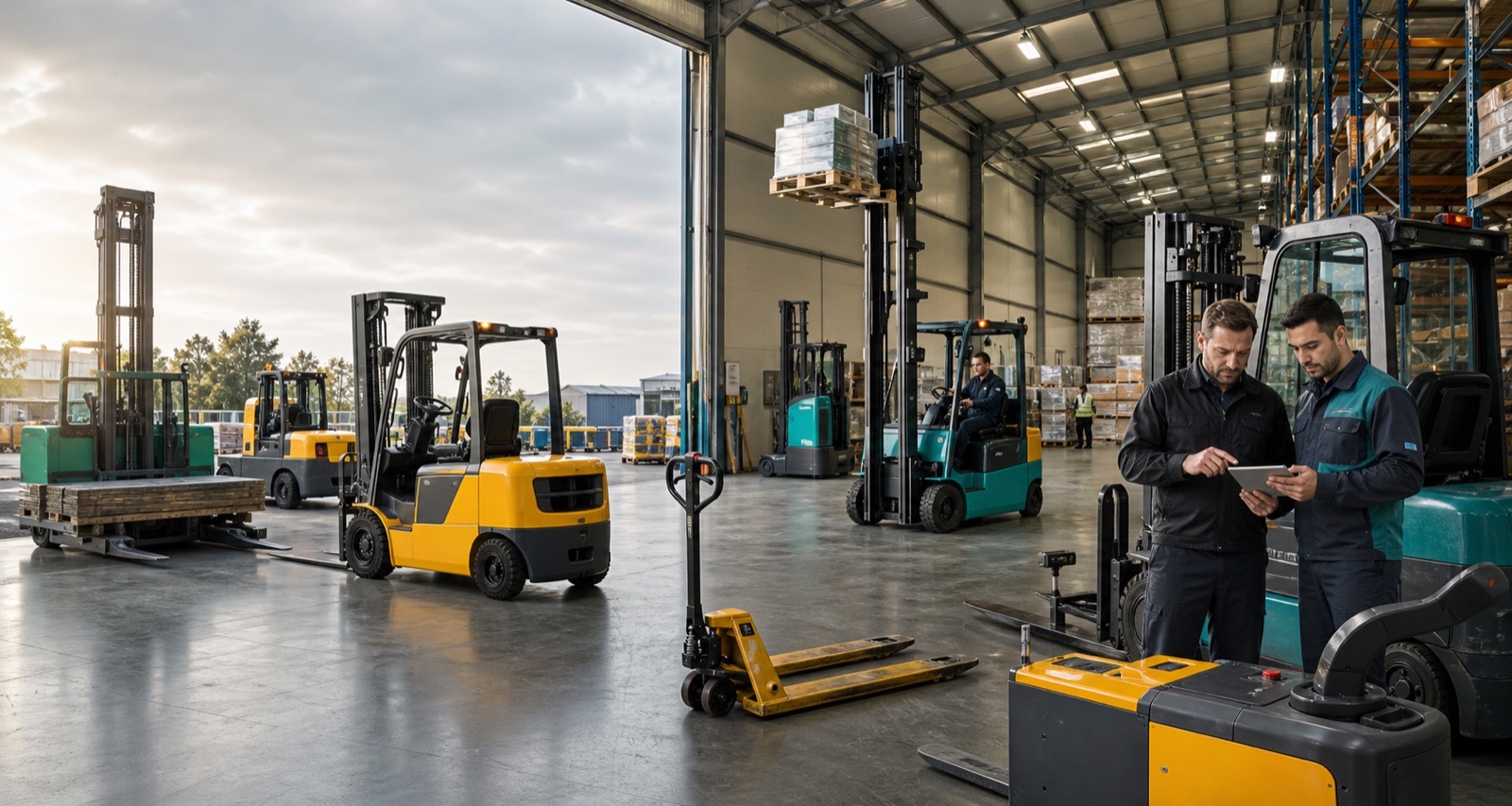
Understanding forklift tyres matters because it can change availability, safety, cost or compliance in a real forklift operation. This guide explains the practical point a manager needs before a simple specification detail turns into the wrong truck, unsafe load movement or avoidable operator uncertainty.
Short answer
Forklift tyres are the contact point between the truck and the floor. Tyre compound, wheel type, wear pattern and surface condition all affect stability, comfort, traction and running cost. For forklift tyres, the basics question is whether managers understand the term well enough to choose, compare or challenge the truck setup. For forklift tyres, the site-specific answer sits in fork length and support beneath the pallet, power availability across consecutive shifts and records showing fork tips failing to support the full load.
What this means in practice
Forklift tyres change how the truck behaves on turns, ramps, yards, dock plates and debris-prone areas. Uneven wear can point to surface damage, overload, misalignment, harsh turning or a truck doing work it was not specified for. For forklift tyres, the basics question is whether managers understand the term well enough to choose, compare or challenge the truck setup. A stronger decision on forklift tyres connects the technical point to the movement, record or cost it changes. Reviewing forklift tyres, the operational check for forklift tyres belongs at the point where a load is first assessed, where the site can record the decision, owner and review date beside the original evidence before it observe the task during a normal busy period rather than an empty-site trial. Use forklift tyres to reach a defensible choice about the truck, task, person, record or cost. Look for battery runtime below the shift requirement as a confirming sign.
Poor tyre or wheel condition can increase vibration, damage components, reduce grip, mark floors, increase operator fatigue and create repeat spend if the route cause is ignored. The next step for forklift tyres may be to stop, observe, repair, train, inspect, hire or replace; site facts should decide which route is proportionate.
Key checks
- On the question of forklift tyres, inspect tread, chunks, flat spots, cracking, sidewall damage and wheel security. Use tyre and ground-clearance suitability on the full route to judge its importance.
- Before changing forklift tyres arrangements, compare wear patterns across similar trucks and routes. Record its effect on fork length and support beneath the pallet.
- During a check of forklift tyres at the point where a load is first assessed, check whether indoor, yard or mixed use needs a different tyre choice. Connect the finding to turning clearance in the tightest working aisle.
- To answer “Forklift tyres explained” with evidence, review surfaces, debris and turning areas before blaming the tyre alone. Show whether it changes operator category for the selected truck type.
- The named owner of forklift tyres should plan replacement before tyre condition affects safety or productivity. Use load-centre variation across awkward pallets to judge its importance.
Common mistakes
For forklift tyres, do not make the call on forklift tyres from appearance alone. Ignoring fork length and support beneath the pallet or failing to capture wheel spin or grounding on ramps removes the evidence needed for comparison.
What good looks like
For forklift tyres, the issue is controlled when the site can demonstrate what happens at the point where a load is first assessed, who owns fork length and support beneath the pallet, how warning devices lost in background noise is recorded and when intervention is required.
When to ask WRMH for help
For forklift tyres, external help is sensible where the point where a load is first assessed produces conflicting evidence or repeated symptoms. WRMH can review power availability across consecutive shifts alongside doorway strikes near the mast or load and connect the finding to the most appropriate practical capability.