
The problem
Busy sites rarely run one perfect fleet from one manufacturer. They often have a reach truck in racking, counterbalance trucks in dispatch, pallet trucks around production, an older yard truck outside and hire equipment brought in when pressure rises. The operational problem begins when every make, age and truck type needs a different support route before the real fault can even be dealt with.
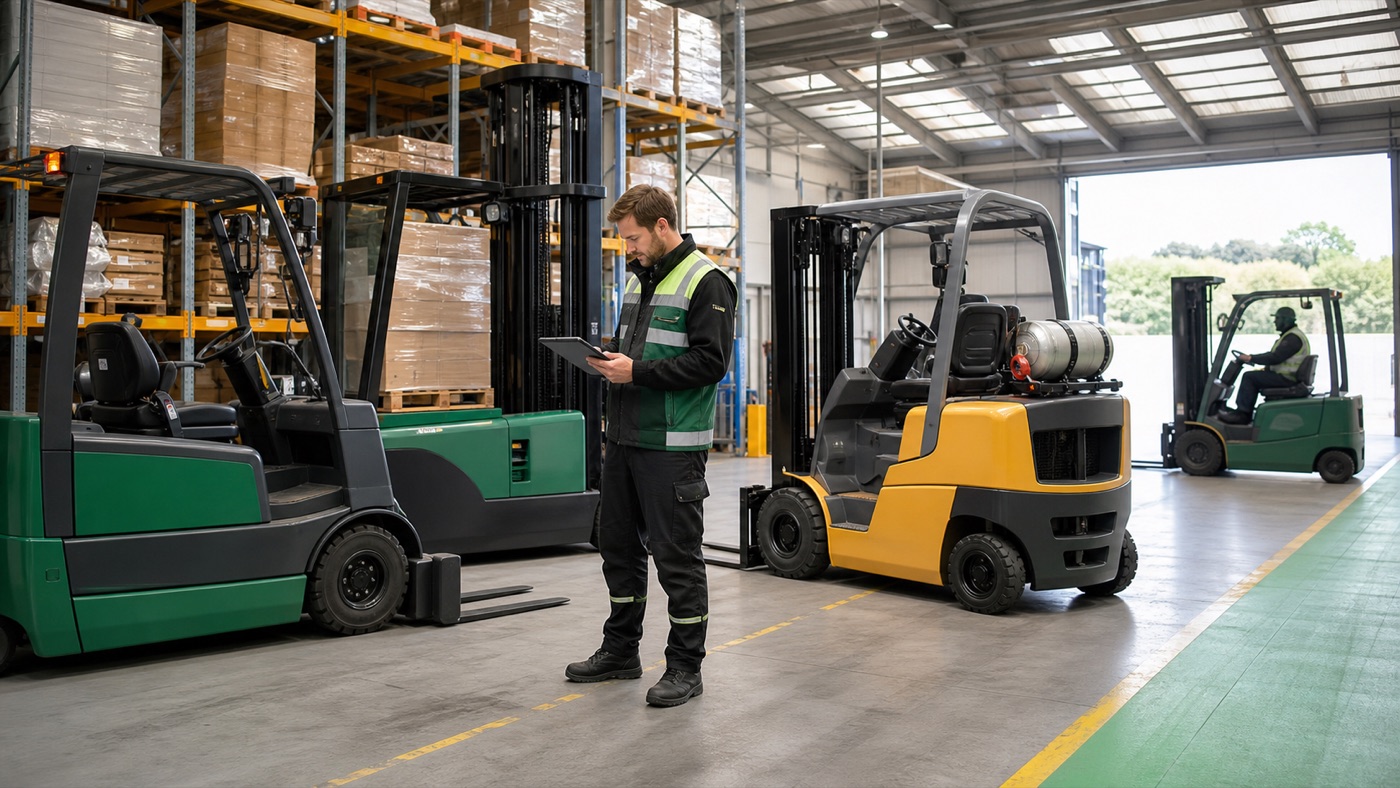
The operational impact shows up when a mixed-fleet fault lands during a live movement. For example, a logistics site may have a grey reach truck feeding racking, a yellow counterbalance loading outbound trailers and a hired pallet truck clearing returned stock. If the counterbalance loses hydraulic lift during a late dispatch window, the supervisor can lose time working out which supplier knows the truck, whether the part is available, whether hire cover is needed and whether the reach truck can safely cover the work. That scenario proves the point: all-makes support matters because the first delay is often decision delay.
Left unmanaged, mixed equipment turns every fault into a fresh investigation. Operators wait while managers chase phone numbers, engineers arrive without enough context, parts are ordered from descriptions, and a truck that should have had a clear route to repair becomes a slow dispatch, overtime or customer-service problem.
How WRMH could help
WRMH can help managers simplify the support route across mixed equipment. We can take the truck details, fault symptoms, urgency, site role and parts evidence, then decide whether the sensible next step is diagnosis, repair, parts sourcing, hire cover, training support, LOLER planning or a wider fleet review. The value is not just knowing many makes; it is turning mixed equipment into one practical response.
The first sensible step is to send one complete fleet-support picture, not separate fragments by truck. WRMH can review the make, model, serial number, site role, fault symptoms, photos, urgency and current workload, then route the issue to the fastest practical answer: prepared engineer attendance, accurate parts identification, temporary hire cover or a bigger fleet decision where the same problem keeps returning.
All-makes support matters when it removes hesitation from the first call and helps busy sites get the right repair, part or cover decision faster. If this sounds familiar, WRMH can help you turn the issue into a practical next step for your site.
Common mistakes
A common mistake is assuming all-makes support only means a provider is willing to look at different brands. The stronger test is whether the provider can turn mixed equipment into a clear response under pressure: correct truck identification, useful fault detail, realistic parts route, engineer preparation and a decision on hire cover if the repair will not protect the shift.
When to ask WRMH for help
Ask WRMH for help when a fault on one make of truck is starting to affect the whole operation, or when mixed equipment is making repair, parts and cover decisions slower than they should be. WRMH can help identify the truck, interpret the fault context, source parts across the supply chain, prepare engineer attendance and decide whether hire cover would protect dispatch while the repair route is confirmed.
Further reading
Build your understanding of this topic
These related knowledge base articles give you more context, checks and practical language before you decide what to do next.