
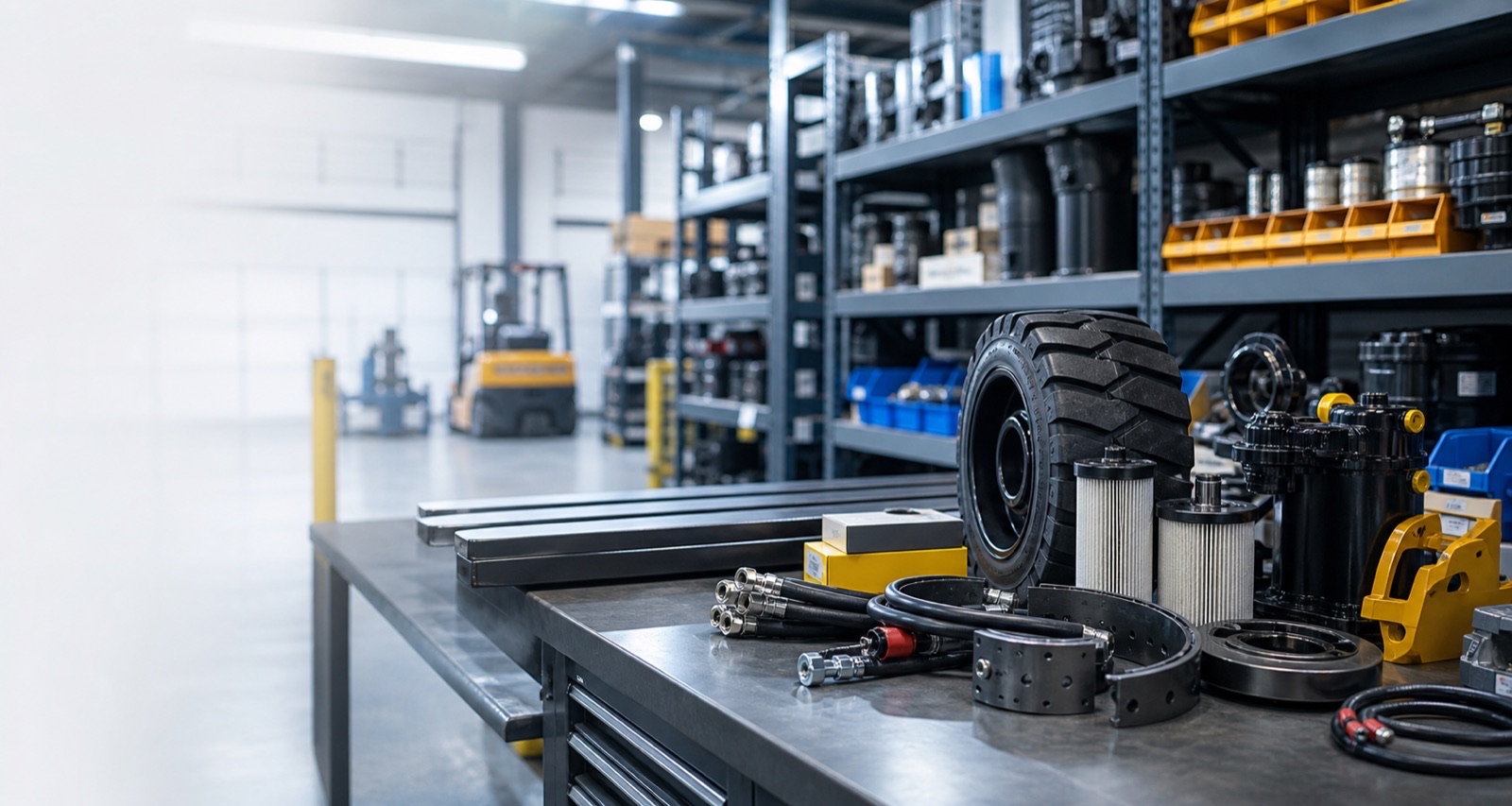
Engineer attendance is more productive when the truck, fault and likely part route are understood before the van arrives. A small amount of accurate information at enquiry stage can decide whether the visit becomes diagnosis only, a repair attempt or a properly prepared first-time fix.
Short answer
Parts identification is the process of matching the required component to the exact truck, variant, mast, fuel type, serial number and fault evidence. It changes engineer attendance because the engineer can arrive with a clearer repair plan, the right likely parts and a better understanding of what needs checking on site.
What this means in practice
On a busy dispatch site, a reach truck with a lift fault may need a switch, sensor, mast roller, hose, controller check or a hydraulic diagnosis. If the enquiry only says "truck will not lift", the engineer starts from scratch. If WRMH receives the model, serial number, fault code, load condition, photos and when the fault occurs, the attendance can be prepared around the most likely causes.
The manager decision is whether to treat parts information as admin or as downtime control. Better identification protects engineer time, helps avoid repeat visits and gives the site a clearer expectation of whether repair, parts supply, hire cover or further diagnosis is the sensible route.
Key checks
- Capture make, model, serial number and truck asset number before the attendance is booked.
- Explain the fault moment: lifting, travelling, charging, braking, steering or warning display.
- Send photos of the truck plate, damaged part, fitting area and any dashboard code.
- Confirm whether the truck is stopped, restricted or still usable with controls in place.
- Agree whether the objective is diagnosis, repair, parts supply or urgent operational cover.
Common mistakes
A common mistake is booking an engineer before anyone has captured the details that shape the visit. The engineer may still help, but the site loses the chance to prepare parts, reduce uncertainty and make the first attendance more valuable.
What good looks like
Good control means every attendance request contains the truck identity, fault evidence, urgency, operating impact and any suspected part information. A manager should be able to explain why the engineer is attending and what outcome is expected.
When to ask WRMH for help
Ask WRMH for help when a fault is affecting production and you want the attendance to be as useful as possible. WRMH can review the truck details, identify likely parts, prepare the engineer route and reduce the chance of wasted labour or a second visit caused by missing information.
send WRMH the truck plate, fault evidence and urgency so the attendance can be planned around the right first action.
Manager decision and evidence
Parts identification changes engineer attendance outcomes affect the match between truck, load, aisle, height, surface and operator visibility. For parts identification changes engineer attendance outcomes, a truck can look right until the load centre, lift height, mast clearance or route constraint is checked. For parts identification changes engineer attendance outcomes, the parts question covers identification, quality, availability and the correct fitting route. For parts identification changes engineer attendance outcomes, managers should use site evidence rather than habit or assumption. Reviewing parts identification changes engineer attendance outcomes, for “How parts identification changes engineer attendance outcomes”, begin at the serial-number check against the component removed from the truck: separate the truck symptom from the route, load and operator conditions and compare the latest observation with the previous three records. Treat parts identification changes engineer attendance outcomes as a controlled sequence rather than an informal task passed between departments. Read the result for parts identification changes engineer attendance outcomes alongside old components discarded before comparison.
If parts identification changes engineer attendance outcomes is misunderstood, the site may choose a truck that is unstable, too large, under-capacity, hard to operate or unsuitable for the working area. Choose the response to parts identification changes engineer attendance outcomes that controls the identified mechanism, not simply the fastest action available. The manager should record who owns the action, what evidence will confirm it has worked and when the decision will be reviewed.
For parts identification changes engineer attendance outcomes, this extra discipline keeps a useful article from ending as general guidance. It gives operations, maintenance and safety teams one shared basis for deciding what changes now and what evidence should be retained.