
The problem
A mixed fleet can give a business useful flexibility, but customer service becomes exposed when every forklift make follows a different maintenance rhythm, fault-reporting route and escalation process. Managers need a common service standard that tells the operation what information to capture, what response each truck role requires and how customer-critical work will be protected if a repair cannot be completed immediately.
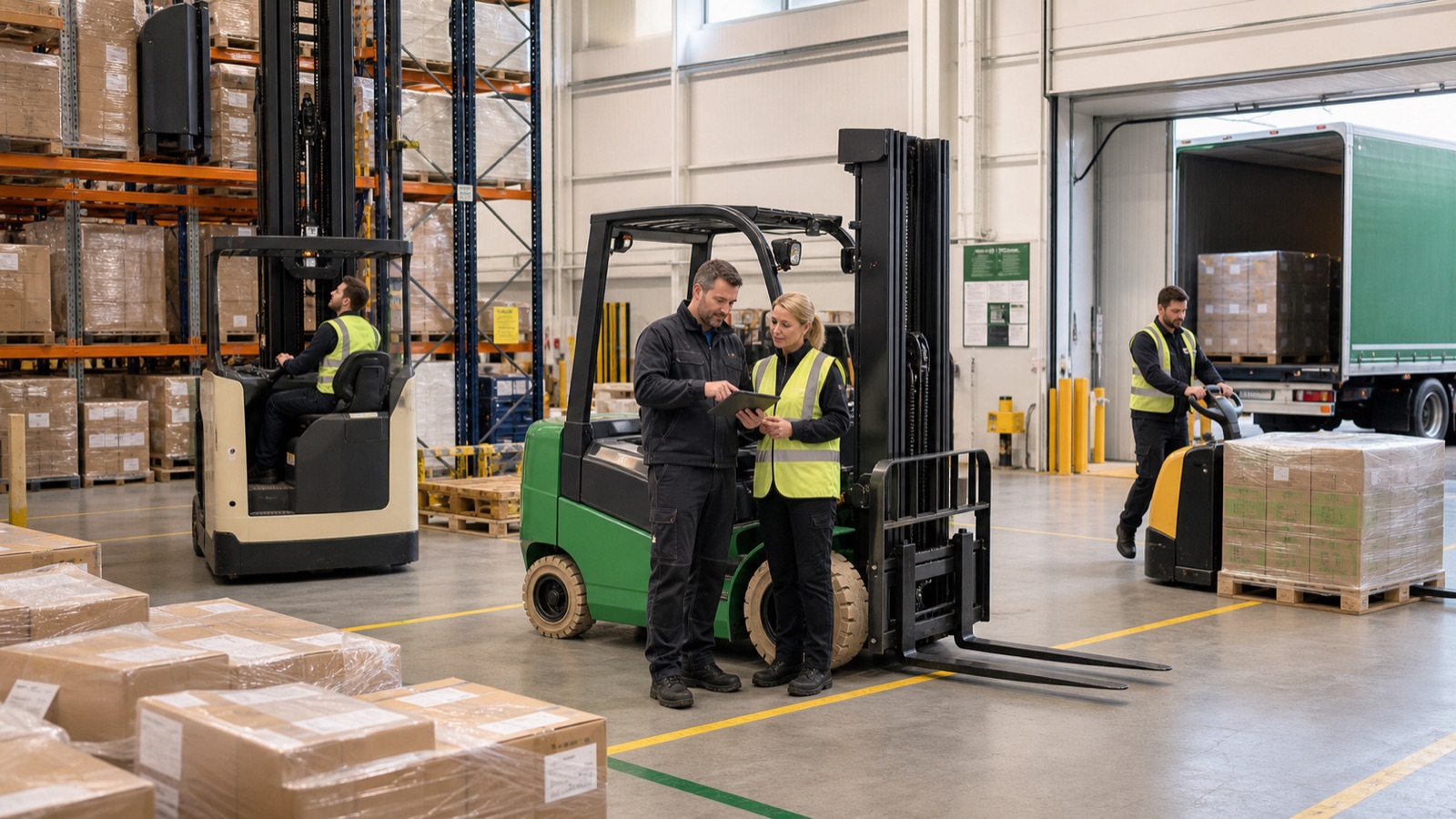
The customer-facing value becomes clear when demand changes at the same moment as equipment availability. For example, a packaging and fulfilment site may use a reach truck for high-bay picking, two counterbalance trucks for trailer loading and a powered pallet truck for finished-goods staging. A priority customer brings a collection forward, but one counterbalance develops an intermittent lift fault during the final loading window. If the site already uses one fault-reporting standard, knows which truck role protects that order, has the correct make, model and serial details ready, and has agreed when hire cover should be considered, the manager can protect the collection without starting a fresh support investigation. That scenario proves the point: consistent service support gives the customer a steadier experience even though the fleet itself is mixed.
Without that standard, each fault can produce a different sequence of calls, missing information and internal decisions. Dispatch may not know whether capacity will return in an hour or the next day, customer-service teams may hesitate over delivery promises, and managers may move another truck into the task without checking whether its capacity, attachment, operator competence or remaining workload make that sensible. The weakness is not the number of brands; it is the absence of one dependable response around the work customers are waiting for.
How WRMH could help
WRMH can help build one practical service framework across different forklift brands without pretending every truck needs identical technical support. We can align asset records, service intervals, defect reporting, engineer preparation, parts identification and cover decisions around the movements customers depend on, while preserving manufacturer-specific diagnostics or components where the equipment requires them.
Begin by asking the team to define a minimum service standard around customer-critical movements. WRMH can help record each truck's make, model, serial number, role, service interval, defect route, common parts evidence, diagnostic requirement and operational consequence if unavailable. Managers can then set clear escalation points: when an engineer needs fuller evidence, when another truck can cover safely, when temporary hire should be considered and who can give the customer-facing team a reliable update.
This turns the mixed fleet service consistency evidence into a controlled next step, with less risk of spending time or budget on the wrong intervention.
Common mistakes
A frequent management error is standardising the paperwork while leaving the operational response unchanged. The same inspection form across every make is useful, but it does not protect a customer collection if fault reports still omit truck identity, engineers receive weak context, specialist diagnostics are discovered late and nobody knows when another truck or hire cover should take over. The standard must define how a fault moves from operator report to a dependable customer-facing decision, not simply make the records look alike.
When to ask WRMH for help
External WRMH support is useful when different forklift makes are producing different service experiences for the teams responsible for dispatch, production or customer commitments. WRMH can help define one usable support standard, identify where brand-specific diagnostics or parts evidence still matter, improve the information supplied before attendance and agree practical cover triggers. That gives managers a clearer route to preserve loading capacity, communicate realistic timescales and maintain service consistency when one truck develops a fault.
Further reading
Build your understanding of this topic
These related knowledge base articles give you more context, checks and practical language before you decide what to do next.