
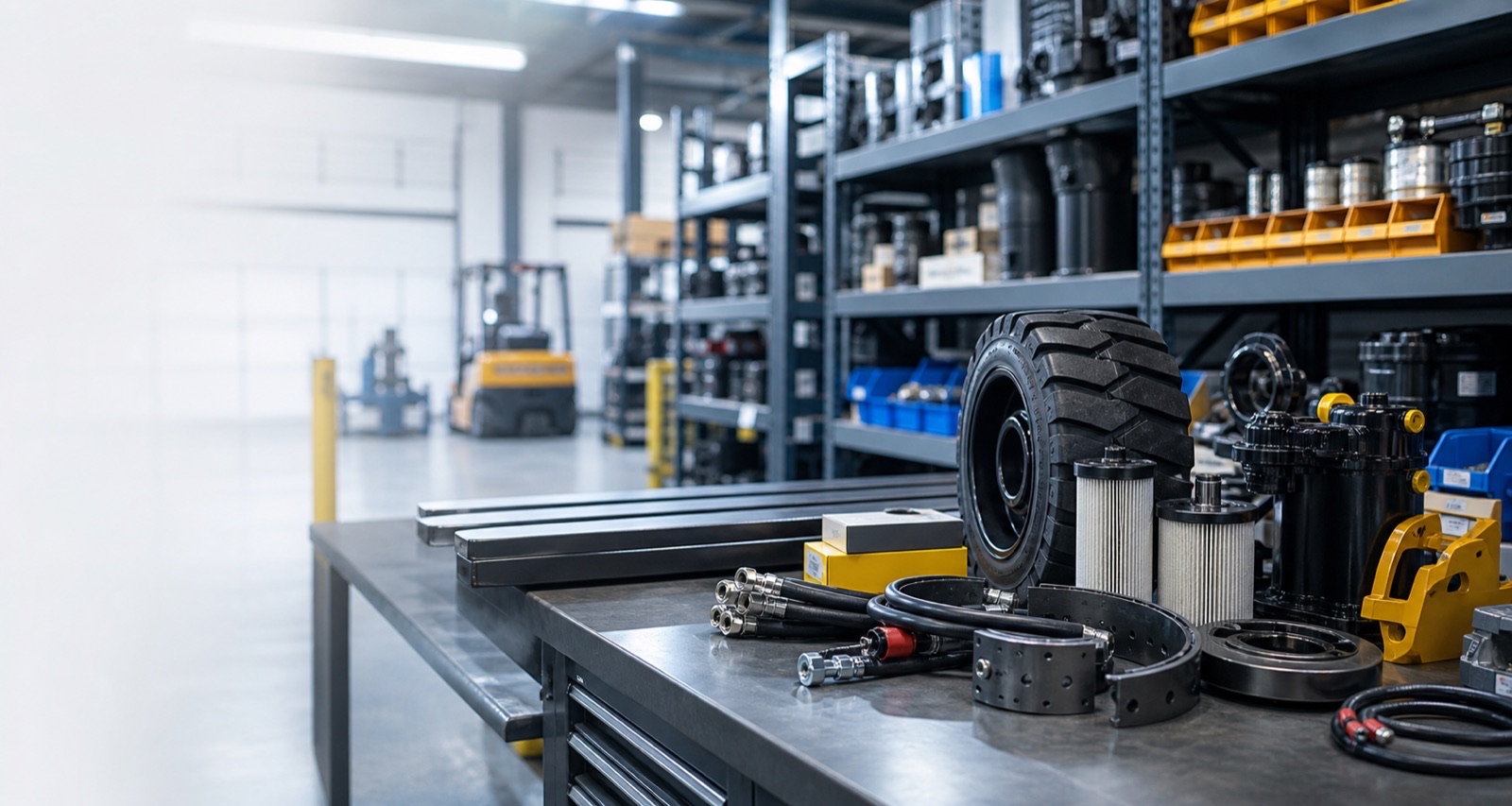
Next-day parts delivery is attractive, but it does not automatically equal next-day repair. The part, engineer, site access and truck availability all need to line up for the delivery speed to turn into recovered uptime.
Short answer
Managers should compare next-day parts delivery with engineer availability by asking whether the correct part can be fitted as soon as it arrives, whether the truck can be accessed safely and whether the repair outcome is worth the premium. Delivery speed only creates value when it shortens the actual downtime.
What this means in practice
A food production site may pay for a next-day hydraulic component, but if the engineer cannot attend until the following afternoon and the truck is buried behind production stock, the gain is limited. In another case, a confirmed wheel kit for a pallet truck may be worth next-day delivery because the site team can safely make the truck available for planned fitting first thing.
The manager decision is whether to buy speed, schedule control or temporary cover. Sometimes hire cover protects output better than urgent parts. Sometimes a standard delivery with a confirmed engineer slot gives a cleaner result than rushing one element of the repair.
Key checks
- Confirm the part is correct before paying for next-day delivery.
- Check the earliest realistic engineer attendance or fitting slot.
- Make sure the truck can be parked, isolated and accessed when needed.
- Compare delivery premium with downtime, lost dispatch and hire cover options.
- Agree who will receive the part and confirm it is on site before fitting.
Common mistakes
A common mistake is approving next-day delivery without checking the engineer diary or site readiness. The parcel arrives quickly, but the operation still waits.
What good looks like
Good control means delivery, engineer attendance and site access are planned as one repair route. The manager can see when the part arrives, when fitting happens and what cover is needed until then.
When to ask WRMH for help
Ask WRMH for help when speed matters but the best route is unclear. WRMH can compare part availability, engineer scheduling and hire cover so the site pays for the option that actually reduces downtime.
ask WRMH to align the parts route with engineer availability before paying for urgent delivery.
Manager decision and evidence
Compare next-day parts delivery with engineer availability improves when the site captures symptoms, when the fault happens, warning codes, recent service history and what the operator noticed before the engineer attends. For compare next-day parts delivery with engineer availability, the parts question covers identification, quality, availability and the correct fitting route. A stronger decision on compare next-day parts delivery with engineer availability connects the technical point to the movement, record or cost it changes. Reviewing compare next-day parts delivery with engineer availability, at the identification step before a purchase order is raised, ask the team to confirm the finding with the operator and the supervisor independently and photograph the condition and record when it appears. The process for compare next-day parts delivery with engineer availability needs an owner, usable evidence and a review point. Do not close the compare next-day parts delivery with engineer availability review without considering substitute parts approved without compatibility proof.
Poor information about compare next-day parts delivery with engineer availability can turn a straightforward repair into extra attendance time, parts delay, hire cost and loss of confidence. The decision on compare next-day parts delivery with engineer availability is whether the truck can continue, needs controlled monitoring or requires a repair, competence, inspection or equipment response. The manager should record who owns the action, what evidence will confirm it has worked and when the decision will be reviewed.
For compare next-day parts delivery with engineer availability, this extra discipline keeps a useful article from ending as general guidance. It gives operations, maintenance and safety teams one shared basis for deciding what changes now and what evidence should be retained.