
The problem
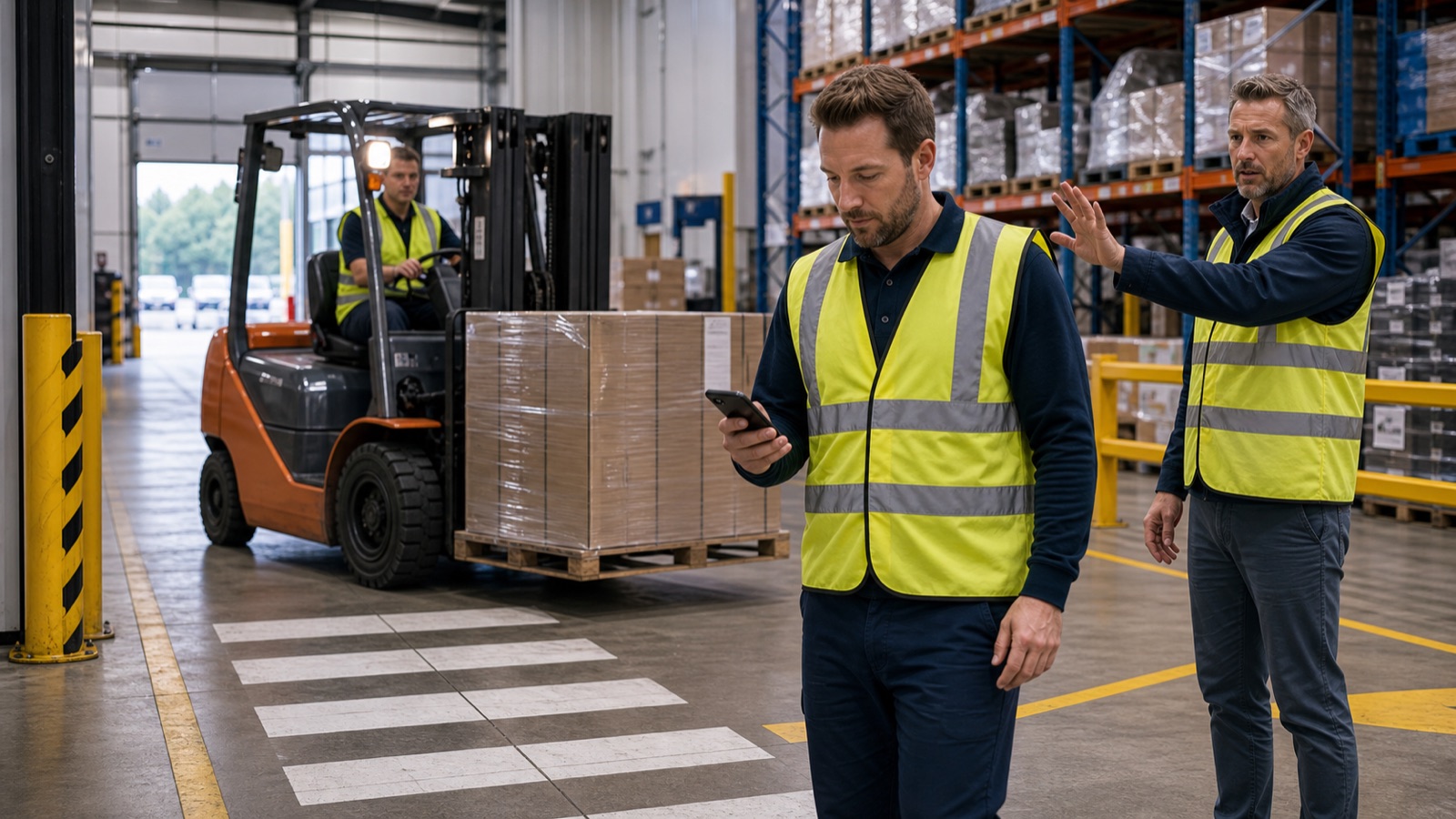
Mobile phone distraction is easy to underestimate because it often sits outside the forklift itself. Operators, pedestrians, visiting drivers, contractors and supervisors may all be using screens near crossing points, loading areas, walkways or shared routes. A quick glance at a message can reduce awareness at exactly the point where a truck, pallet, doorway or blind corner needs full attention.
The risk is not limited to the person driving the truck. A pedestrian reading a screen, a visiting driver checking instructions or a supervisor answering a message can all step into the same shared space at the wrong moment. For example, a visiting driver checking a delivery reference on a phone near a loading-bay crossing can step into a reversing route just as an operator is watching the load and mirrors.
Because phone use feels ordinary, it can be difficult to challenge until a near miss makes it obvious. Sites need to design routes, briefings and expectations around real behaviour rather than assuming attention is always where it should be.
How WRMH could help
WRMH can help customers look at distraction as part of a wider workplace transport risk picture. We can review where pedestrians and forklifts interact, highlight visibility and route issues, support operator and pedestrian awareness training, and help managers decide whether signage, segregation, briefing routines or equipment changes would make the site easier to control.
WRMH would start by helping the site identify where phones and forklift movement overlap. WRMH can help review pedestrian routes, waiting areas, loading points, driver handover habits and briefing standards, then suggest controls that match how people actually use the site.
A defined owner and review point turn the distraction risk finding into an operational control rather than another observation.
Common mistakes
The avoidable error is treating phone use as a personal habit rather than a workplace transport control issue. It makes the immediate task look complete, but leaves the site unable to explain why the same issue should not return.
When to ask WRMH for help
Consider WRMH support when phones, pedestrians, visiting drivers or supervisors share space with forklift movement. The review should finish with a practical decision, the evidence behind it and a point at which the result will be checked.
Further reading
Build your understanding of this topic
These related knowledge base articles give you more context, checks and practical language before you decide what to do next.