
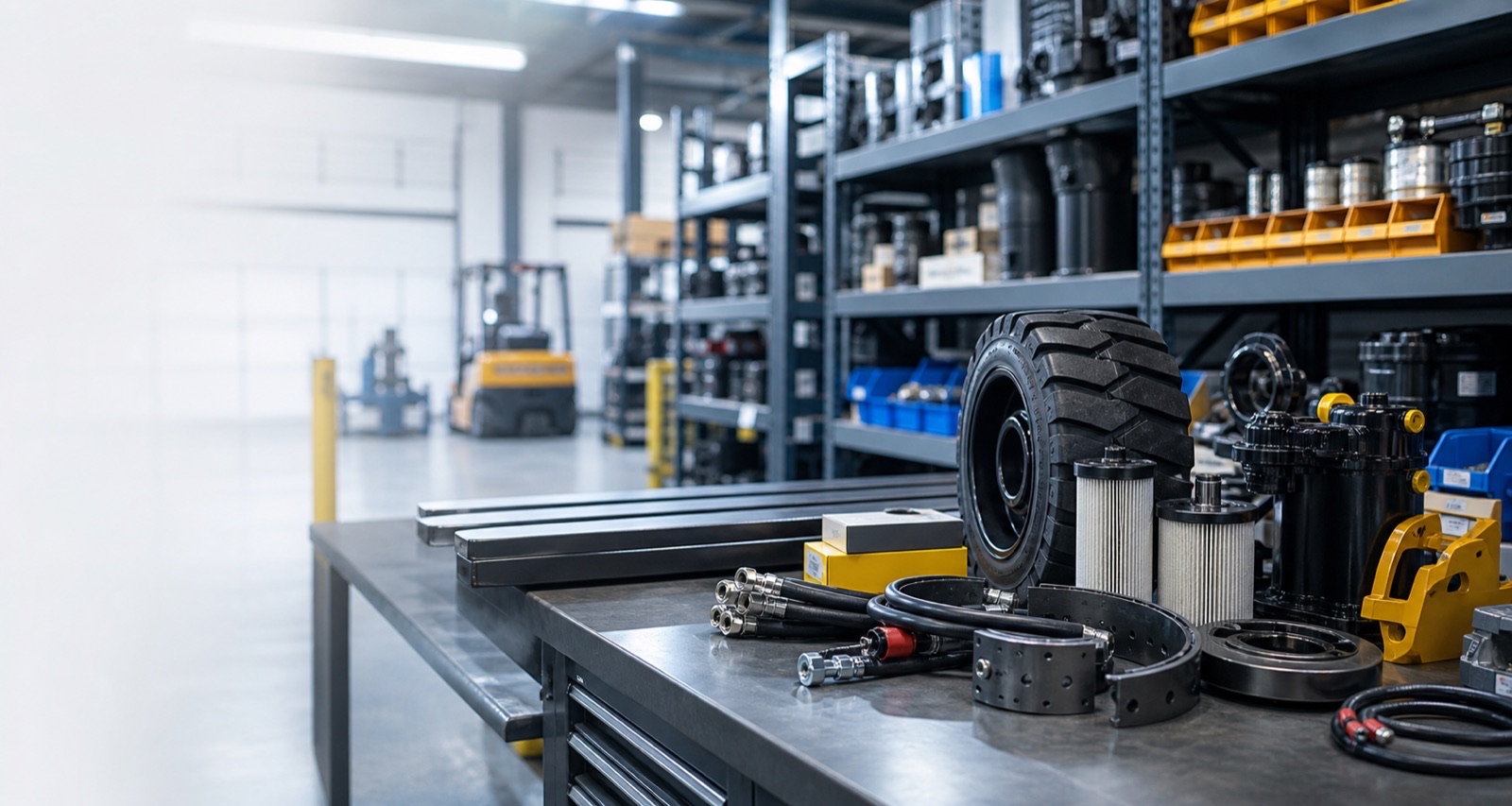
Alternative parts can be useful when they are correctly matched, suitable quality and appropriate for the risk level. They become a problem when substitution is treated as a quick saving rather than a controlled decision.
Short answer
A substitute forklift part should only be used when the fit, specification, safety impact, warranty position and operating duty are understood. Managers should be more cautious where the component affects braking, steering, lifting, hydraulics, stability, operator protection, visibility or control systems.
What this means in practice
A replacement light lens, seat component or low-risk consumable may have more acceptable alternative routes than a brake component, chain, fork, mast roller, controller or hydraulic hose. The issue is not whether non-original parts are always wrong. The issue is whether the alternative is right for this truck, this duty and this consequence of failure.
The manager decision is who is allowed to approve substitution and what evidence they need. If purchasing swaps a part only because it is cheaper or available faster, the operation may inherit fit problems, repeat failures, warranty questions or safety concerns.
Key checks
- Confirm the substitute matches the truck model, serial range and component duty.
- Check whether the part affects safety, LOLER evidence or warranty confidence.
- Compare quality, fit, lead time and support route together.
- Record who approved the substitution and why it was acceptable.
- Ask WRMH before substituting parts on critical trucks or critical systems.
Common mistakes
A common mistake is treating "available today" as the same as "suitable today". A fast substitute that does not match the application can turn one delay into a repeat fault and another engineer visit.
What good looks like
Good control means alternative parts are chosen deliberately. The manager can explain the quality level, suitability, risk boundary and warranty position, and the repair record shows why the substitute was approved.
When to ask WRMH for help
Ask WRMH for help when an alternative part is being considered for a truck that matters to output or safety. WRMH can compare suitability, quality and supply options so the site protects uptime without taking a blind risk on fit or performance.
ask WRMH to sense-check substitute part options before approving a cheaper or faster alternative.
Manager decision and evidence
Substitute forklift parts decisions should be controlled affect the operation when the issue changes truck availability, route planning, operator confidence, repair timing or compliance evidence. For substitute forklift parts decisions should be controlled, ask where it touches the working day rather than whether it sounds technical. For substitute forklift parts decisions should be controlled, the parts question covers identification, quality, availability and the correct fitting route. For substitute forklift parts decisions should be controlled, managers should use site evidence rather than habit or assumption. Reviewing substitute forklift parts decisions should be controlled, for “How substitute forklift parts decisions should be controlled”, begin at the serial-number check against the component removed from the truck: confirm the finding with the operator and the supervisor independently and observe the task during a normal busy period rather than an empty-site trial. Treat substitute forklift parts decisions should be controlled as a controlled sequence rather than an informal task passed between departments. Read the result for substitute forklift parts decisions should be controlled alongside component orders returned after incomplete identification.
If substitute forklift parts decisions should be controlled is handled loosely, managers can spend money without solving the real constraint, leave uncertainty in the records or keep a truck working in conditions that deserve a clearer decision. The decision on substitute forklift parts decisions should be controlled is whether the truck can continue, needs controlled monitoring or requires a repair, competence, inspection or equipment response. The manager should record who owns the action, what evidence will confirm it has worked and when the decision will be reviewed.
For substitute forklift parts decisions should be controlled, this extra discipline keeps a useful article from ending as general guidance. It gives operations, maintenance and safety teams one shared basis for deciding what changes now and what evidence should be retained.