
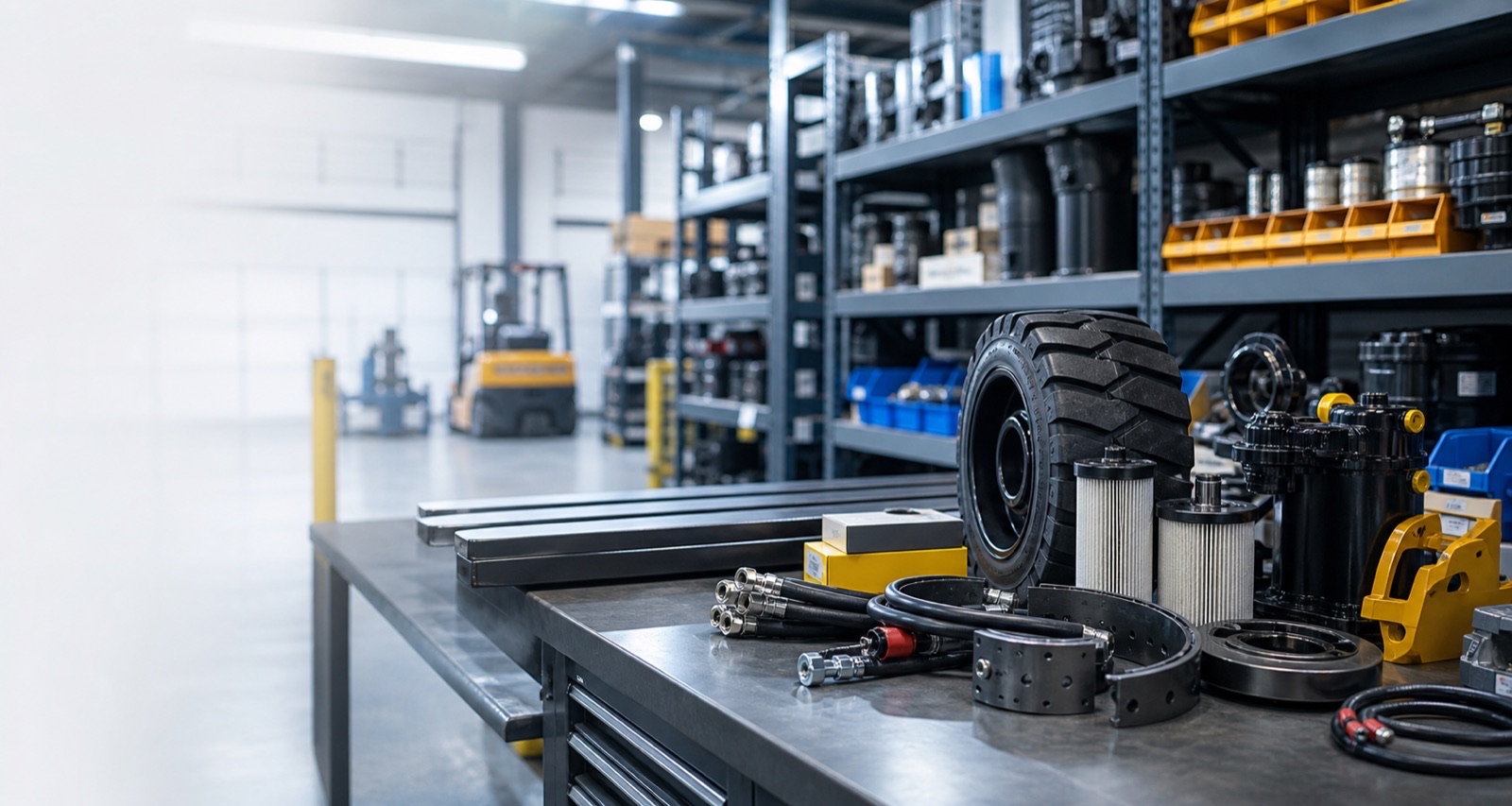
Not every forklift part carries the same risk. Some parts affect comfort or appearance. Others affect stopping, steering, lifting, load stability, operator protection, warning systems or inspection evidence. Managers need a simple way to recognise when a part decision deserves more control.
Short answer
A forklift part should be treated as safety critical if it affects braking, steering, lifting, hydraulics, chains, forks, mast function, stability, restraint, visibility, warnings, operator protection or any function linked to LOLER or defect control. These parts need accurate identification, suitable quality and the right fitting route.
What this means in practice
A replacement light lens may be straightforward, but a warning light linked to pedestrian visibility can still matter. Brake parts, mast rollers, chains, forks, hydraulic hoses and seat restraints need a stronger decision because failure can affect people, loads and the truck's legal or safe use.
The manager decision is whether the truck can keep working, whether the part should be fitted by an engineer and what evidence is needed before returning the truck to service. Guessing is not good enough where the consequence of failure is high.
Key checks
- Ask whether the part affects braking, steering, lifting or load control.
- Check whether it links to operator protection, visibility or warning systems.
- Consider whether a LOLER defect or service finding is involved.
- Confirm quality, compatibility and fitting route before ordering.
- Record what was fitted and how the truck was checked afterwards.
Common mistakes
A common mistake is treating a part as non-critical because it is small or inexpensive. The size of the part does not decide the risk; the function it controls does.
What good looks like
Good control means safety-critical parts are identified accurately, sourced at the right quality level, fitted by the right route and linked to clear return-to-work evidence.
When to ask WRMH for help
Ask WRMH for help when you are unsure whether a part affects safe operation, LOLER evidence or defect control. WRMH can identify the component, advise on quality and fitting, and help reduce the risk of returning a truck to work too casually.
Helpful next step: ask WRMH to confirm whether the component is safety critical before ordering or fitting it.