
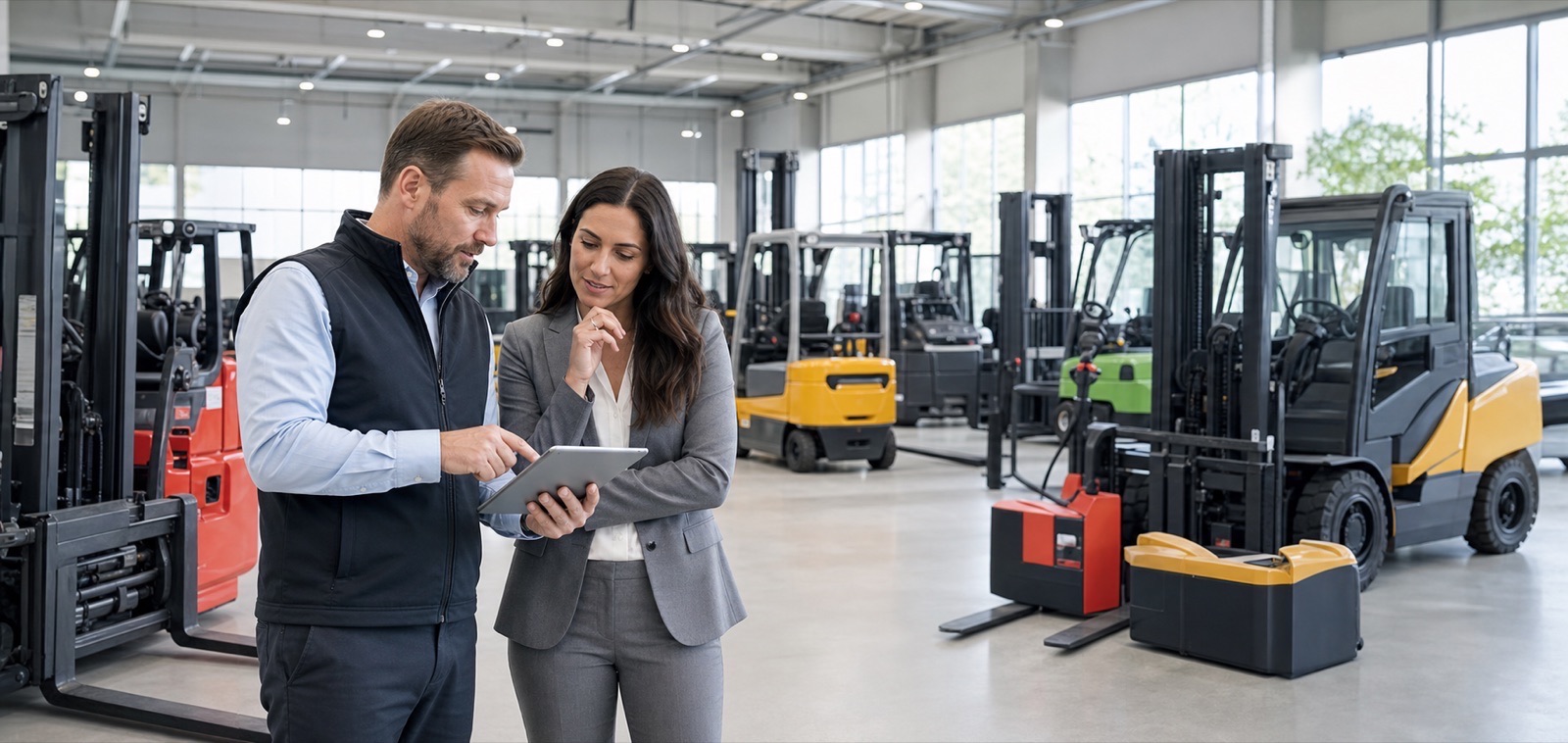
Capital-smart sourcing is not always about finding a cheaper truck. Sometimes the saving comes from reducing unnecessary variation across the fleet. Standardisation can make parts, training, batteries, chargers, maintenance and operator familiarity easier to manage.
Short answer
Fleet standardisation protects capital when it reduces avoidable complexity without forcing the wrong truck into the wrong job. Managers should standardise where equipment roles are similar, but keep specialist trucks where the load, aisle, surface or sector need genuinely requires them.
What this means in practice
A site with several different makes, battery types, charger requirements and tyre specifications may carry more hidden cost than it realises. Operators may need more familiarisation, parts identification becomes slower, chargers are harder to share and maintenance planning takes more effort.
Standardisation can reduce those pressures, but it should not become rigid. A sideloader, pivot steer, reach truck or food-safe pallet truck may be the right specialist answer. The manager decision is where consistency saves money and where specialisation protects the operation.
Key checks
- Group trucks by actual job, load, route, lift height and environment.
- Look for unnecessary variation in batteries, chargers, tyres, controls and attachments.
- Check whether operator training and familiarisation are harder than they need to be.
- Compare parts and maintenance complexity across the fleet.
- Keep specialist equipment where the application genuinely demands it.
Common mistakes
A common mistake is either standardising too aggressively or not at all. Too much standardisation can create poor equipment fit. Too little can create parts delays, training complexity and fragmented support that managers only notice when something fails.
What good looks like
Good control means the fleet has sensible consistency where jobs are similar and clear justification where specialist equipment remains necessary. Managers can explain why each truck type exists and how that choice affects cost, uptime and training.
When to ask WRMH for help
Ask WRMH for help when a mixed fleet is becoming harder to support or explain. WRMH can review truck roles, parts patterns, operator needs, charging setup and maintenance routes to identify where standardisation would reduce cost without weakening capability.
ask WRMH to review whether your fleet mix is helping or complicating the operation.
Manager decision and evidence
Fleet standardisation can protect capital and reduce hidden cost should be judged against hours, criticality, support cover, warranty, maintenance, residual value and the cost of the truck being unavailable. With fleet standardisation can protect capital and reduce hidden cost, the cheapest route can be expensive if it leaves the site exposed. For fleet standardisation can protect capital and reduce hidden cost, the sourcing question is whether the decision protects cashflow, support cover and the future operating plan. A stronger decision on fleet standardisation can protect capital and reduce hidden cost connects the technical point to the movement, record or cost it changes. Reviewing fleet standardisation can protect capital and reduce hidden cost, for “How fleet standardisation can protect capital and reduce hidden cost”, begin at the specification meeting before quotes are requested: separate the truck symptom from the route, load and operator conditions and compare the latest observation with the previous three records. The process for fleet standardisation can protect capital and reduce hidden cost needs an owner, usable evidence and a review point. Read the result for fleet standardisation can protect capital and reduce hidden cost alongside support costs excluded from finance comparisons.
A weak decision on fleet standardisation can protect capital and reduce hidden cost can lock in the wrong truck, hide maintenance cost, consume capital unnecessarily or make replacement harder. The decision on fleet standardisation can protect capital and reduce hidden cost is whether the truck can continue, needs controlled monitoring or requires a repair, competence, inspection or equipment response. The manager should record who owns the action, what evidence will confirm it has worked and when the decision will be reviewed.
For fleet standardisation can protect capital and reduce hidden cost, this extra discipline keeps a useful article from ending as general guidance. It gives operations, maintenance and safety teams one shared basis for deciding what changes now and what evidence should be retained.