
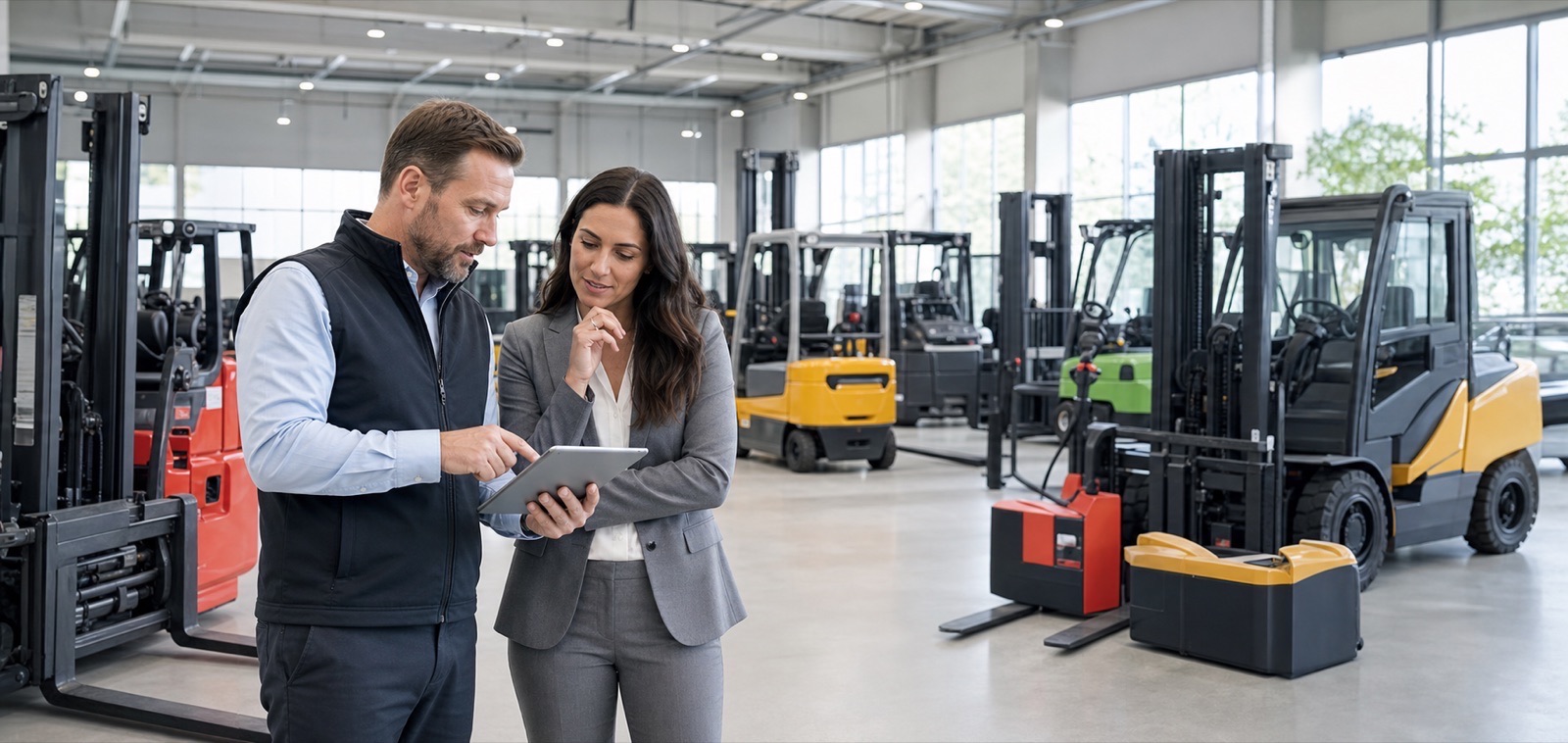
A forklift sourcing decision can create a training decision. If the new equipment has a different truck category, control layout, mast type, attachment, power source, working aisle or operating environment, managers need to consider whether operators remain competent for the job they are being asked to do.
Short answer
Before introducing new, used, hired or leased equipment, check whether existing operators are trained and familiar with that truck type and application. The commercial benefit of a new sourcing route can be weakened if training, familiarisation and records are not handled at the same time.
What this means in practice
Changing from counterbalance to reach truck, adding a powered pallet truck, using a pivot steer truck, introducing attachments or moving from a warehouse to yard application can all affect competence. Even where formal conversion training is not needed, site-specific familiarisation may still be important. Managers should also consider agency workers, new starters and supervisors who need visibility of who can use what.
Training records matter because they give managers evidence. If equipment changes but certificates, refresher dates and familiarisation notes are scattered or outdated, the business can lose control of competence evidence just when it needs clarity.
Key checks
- Compare the new truck category with existing operator certificates.
- Check whether attachments, controls, route or environment have changed.
- Identify who needs conversion, refresher or site familiarisation.
- Make supervisor access to training records clear before the truck starts work.
- Plan training dates alongside delivery, handover or hire start dates.
Common mistakes
A common mistake is treating equipment sourcing and operator training as separate projects. The truck may arrive ready to work, but the team may not be ready to use it confidently, safely or productively. That can create delays, damage, unsafe habits and weak evidence if something is questioned later.
What good looks like
Good control means the truck choice and training plan arrive together, with operators matched to the equipment category, task, site route, attachments and evidence managers need to hold.
When to ask WRMH for help
Ask WRMH for help when a sourcing decision changes the truck type, task or working environment. WRMH can help identify training, conversion, refresher or familiarisation needs and connect the equipment decision with the training records managers need to keep.
ask WRMH to check the training implications before the truck arrives on site.
Manager decision and evidence
Forklift sourcing decisions affect operator training and competence should be judged against hours, criticality, support cover, warranty, maintenance, residual value and the cost of the truck being unavailable. With forklift sourcing decisions affect operator training and competence, the cheapest route can be expensive if it leaves the site exposed. For forklift sourcing decisions affect operator training and competence, the sourcing question is whether the decision protects cashflow, support cover and the future operating plan. For forklift sourcing decisions affect operator training and competence, managers should use site evidence rather than habit or assumption. Reviewing forklift sourcing decisions affect operator training and competence, the operational check for forklift sourcing decisions affect operator training and competence belongs at the review of the current truck's repair and utilisation history, where the site can compare the latest observation with the previous three records before it record the decision, owner and review date beside the original evidence. Treat forklift sourcing decisions affect operator training and competence as a controlled sequence rather than an informal task passed between departments. Look for maintenance cover ending before the planned term as a confirming sign.
A weak decision on forklift sourcing decisions affect operator training and competence can lock in the wrong truck, hide maintenance cost, consume capital unnecessarily or make replacement harder. Evidence about forklift sourcing decisions affect operator training and competence should determine whether the action is operational control, technical repair, operator development, temporary cover or planned replacement. The manager should record who owns the action, what evidence will confirm it has worked and when the decision will be reviewed.
For forklift sourcing decisions affect operator training and competence, this extra discipline keeps a useful article from ending as general guidance. It gives operations, maintenance and safety teams one shared basis for deciding what changes now and what evidence should be retained.