
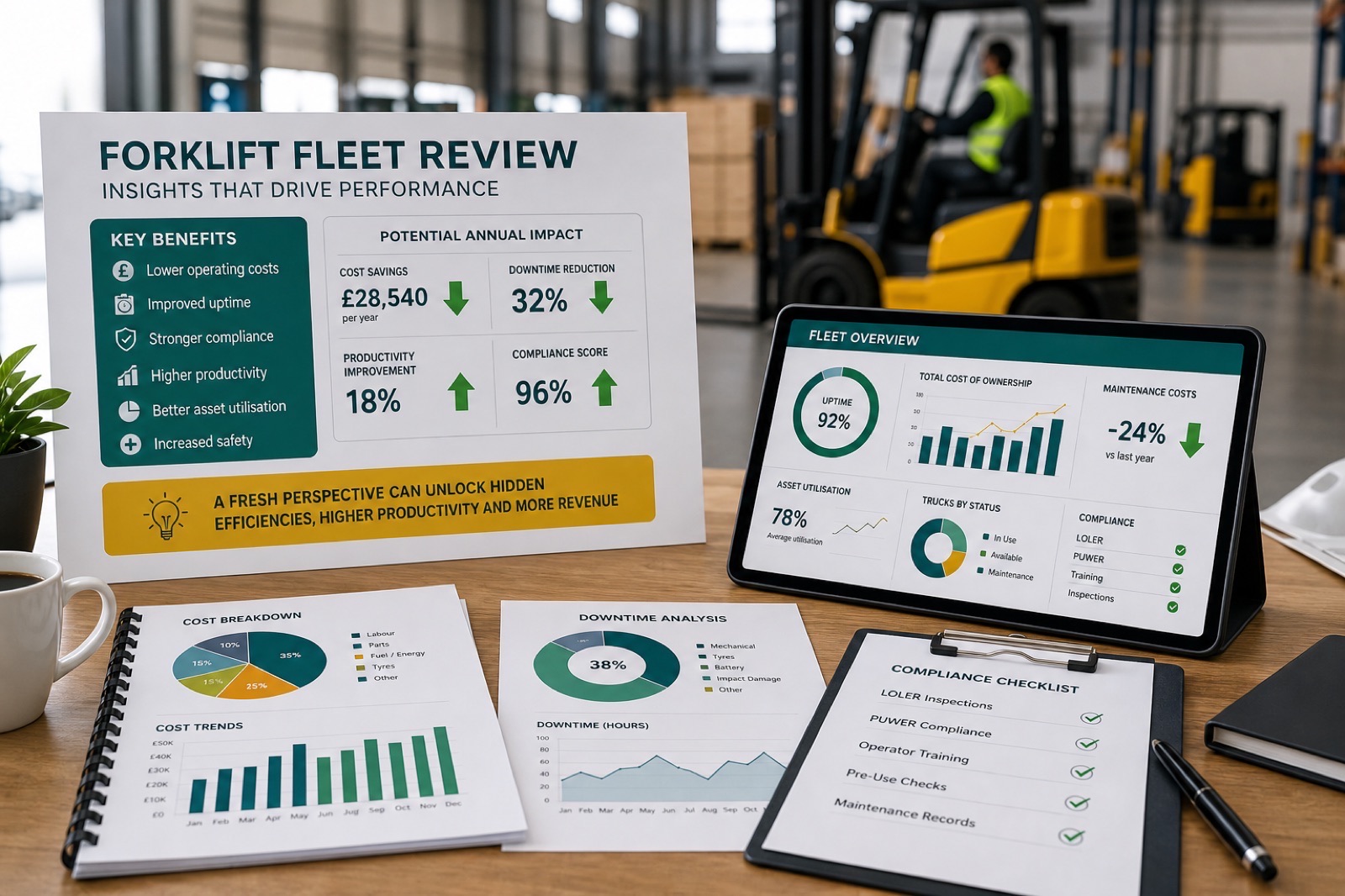
Loading-bay damage reaches beyond the repair budget when a dock door, leveller, truck or outbound pallet becomes unavailable during a booked vehicle window. The customer consequence may be a late delivery even though production and stock availability were on plan.
Short answer
Forklift damage affects delivery-slot reliability when it removes a critical bay movement without enough recovery time or alternative capacity. Managers should identify which damage events stop loading, how long recovery takes and which customer commitments depend on that window. Prevention and contingency should focus on the bottleneck, not every minor mark.
What this means in practice
A building-products depot has one counterbalance approved for trailer loading. It clips a dock post and breaks a rear light twenty minutes before a scheduled collection. The truck is isolated, no equivalent trained operator-and-truck combination is available, and the vehicle misses its slot. A small component creates an outward service failure because the bay had no resilient alternative.
The manager decides whether better protection, a revised turn, spare-part readiness, hire cover or cross-trained capacity gives proportionate resilience. Record the customer effect alongside repair hours.
Key checks
- Identify truck, bay and operator combinations that are single points of failure.
- Link damage events to missed slots, vehicle waiting and delivery rescheduling.
- Measure response time for isolation, diagnosis, parts and replacement capacity.
- Check dock clearances and staging during the busiest booked windows.
- Define when contingency hire or an alternative bay should be activated.
Service resilience is not achieved by keeping an unsafe truck working. The plan should make prompt isolation compatible with protecting the delivery commitment through a prepared alternative.
Use the booking profile to prioritise resilience. A two-hour engineer response may be adequate during quiet periods but still miss a fixed carrier departure, so cover decisions should reflect the recovery time available before the customer promise changes.
Common mistakes
Counting repair value without recording the missed slot understates the commercial consequence. Another mistake is naming a spare truck that cannot use the dock, lift the load or be operated by the available team.
What good looks like
Critical loading movements have verified alternatives, damage response triggers are clear and dispatch can explain which customer commitments are exposed. Bay geometry is reviewed at peak conditions. Managers measure both repair recovery and delivery performance and can justify the chosen level of cover.
When to ask WRMH for help
Ask WRMH when recurring bay contact or a single-truck dependency threatens booked collections. WRMH can inspect damage and route suitability, improve repair preparation and advise on compatible hire or fleet capacity. This reduces recovery time and protects delivery consistency without compromising safe isolation.
select the busiest delivery window and prove that the named alternative truck, bay and operator combination can complete it.