
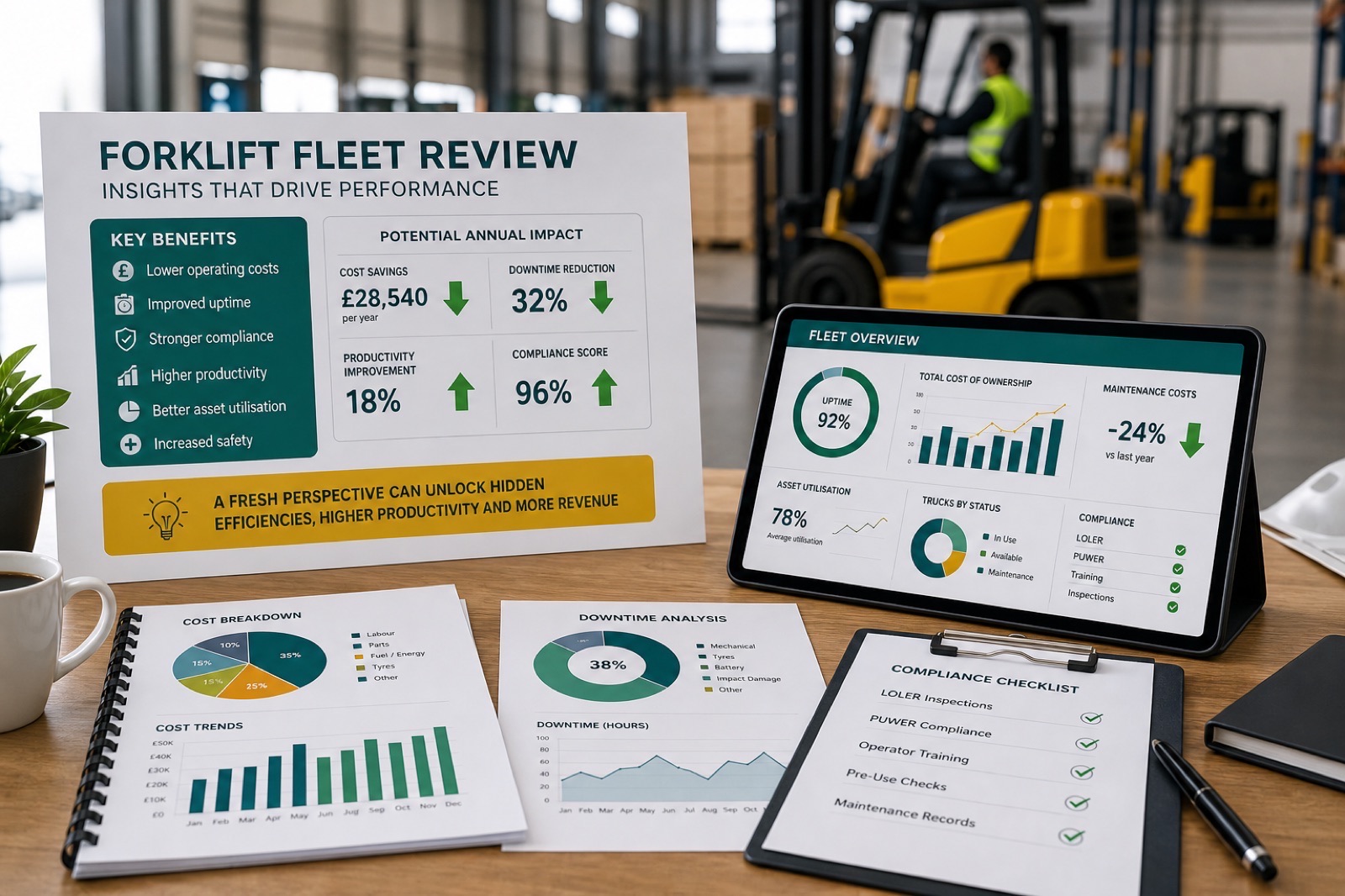
Productivity targets become damaging when they reward completed moves but make the consequences of hurried handling invisible. Operators may still be following the instruction to clear a dispatch lane, replenish production or turn vehicles around quickly, yet the measure can encourage sharper cornering, rushed pallet entry and delayed defect reporting if repair cost and contact events sit outside the same conversation.
Short answer
A forklift target needs review when damage, near contacts, tyre wear or unreported defects rise around the shift, task or time window being rewarded. Managers should compare output with damage frequency, severity and truck unavailability over the same amount of work. The answer is usually to redesign the measure and workflow, not simply lower the target or blame the operator.
What this means in practice
Consider a drinks warehouse where the late shift is measured on trailers cleared before the carrier cut-off. Pallet moves increase, but so do split pallets, rear-corner panel repairs and bent rack protectors during the final ninety minutes. Operators are staging two loads deep to keep the dock moving, leaving less space to turn. The immediate performance figure looks strong while maintenance, product loss and the following shift absorb the cost.
The first manager decision is whether the target is exposing a competence issue, encouraging an avoidable shortcut or asking the route and fleet to deliver more than they can support. Observe the last hour at normal pace. Record queue length, pallet positions, travel direction, truck availability, loading interruptions and the exact point at which operators change technique. That evidence distinguishes an unrealistic target from poor individual practice.
Use a balanced measure rather than one output number. Completed pallet moves can sit beside contact events, damaged pallets, defect reports, repair downtime and rework. Normalise the figures per thousand pallet movements or operating hours so a quieter week does not appear safer by default. Minor contact reporting must remain encouraged; otherwise an apparent improvement may simply mean less evidence.
Key checks
- Compare damage by hour with the exact production, dispatch or vehicle-turnaround target in force.
- Check whether incentives count completed moves while excluding damaged stock, delayed defect reports and truck downtime.
- Observe the route when queues are longest, including temporary staging and pedestrian interruptions.
- Separate one operator's technique from a shortcut used by several competent operators under the same pressure.
- Calculate contacts, pallet damage and repair hours per thousand moves before and after any change.
- Set a trigger for adding capacity, changing the sequence or pausing the target when safe space disappears.
Target design also affects supervisors. If they are judged only on output, stopping a truck for a developing fault or resetting an unsafe staging area can look like underperformance. Give supervisors authority to protect the route and record why output was interrupted. A valid stop should become operational evidence, not a failure hidden at shift end.
Truck suitability needs testing as part of the review. A target may have been achievable when loads were shorter, staging was lighter or a compact truck was available. A longer-wheelbase counterbalance, tall load or attachment can reduce the margin at the same turn. If the task changed, coaching operators to move faster with the old specification will not restore the lost clearance.
Trial one change at a time where practical. A timed dock window, revised pallet sequence, additional peak hire truck or different staging boundary can be tested against the baseline. Keep workload comparable and agree the decision rule in advance: for example, retain the change if moves remain within five per cent of target while contacts and damaged pallets fall by a stated amount.
Repair information completes the picture. Repeated damage to the same rear light, wheel, fork tip or panel can identify the movement being rushed. Ask the engineer what the physical pattern suggests, then match it to supervisor observations and task timing. The invoice describes the component; the operating evidence explains why it keeps returning.
The commercial comparison should include more than repair parts. Add product write-offs, rack or door repairs, investigation time, replacement hire, late dispatch, missed production replenishment and the hours the truck is unavailable. A target that saves fifteen minutes at the dock but creates recurring downtime elsewhere is transferring cost rather than improving productivity.
Common mistakes
The most common mistake is responding with a general instruction to slow down while leaving the same cut-off, queue and incentive unchanged. Another is removing the target completely without proving which part caused the damaging behaviour. Both approaches lose useful information. Managers need to keep the operational objective visible while changing the conditions or measures that reward the wrong shortcut.
What good looks like
A well-controlled operation can show output and damage exposure on the same review. Supervisors know when they may stop or resequence work, temporary staging limits remain visible during peaks, and operator observations are checked against repair evidence. The manager can explain why the target is achievable with the available trucks and space, and can show that improved throughput has not been purchased with higher contact rates, concealed defects or later downtime.
When to ask WRMH for help
Ask WRMH when output remains acceptable but damage clusters around a task, shift or deadline and the site cannot tell whether the remedy is training, maintenance, layout or capacity. WRMH can review repair history, inspect the affected trucks and observe the movement through a Fleet 360 review. That connects physical damage evidence to the workload and helps managers choose a targeted trial without weakening the operational result they still need.
Helpful next step: compare the busiest two hours of the week with the quietest two, using moves, contacts, pallet damage and truck downtime on one sheet.