
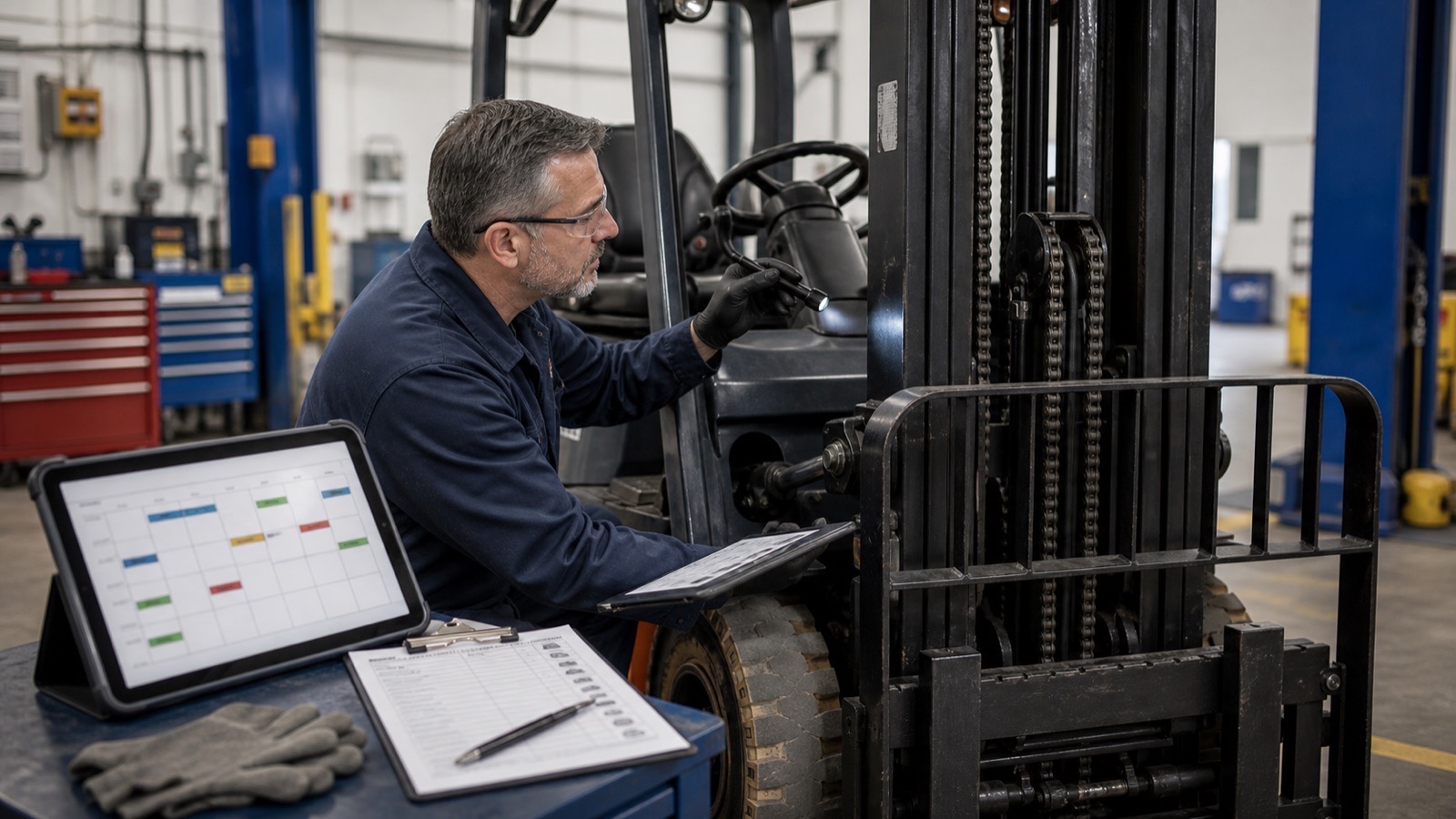
An attachment change alters more than the tool on the carriage. It can change effective capacity, load centre, visibility, hydraulic connections, truck length and the controls an operator must use. Damage occurs when fitting is treated as a quick mechanical swap rather than a release-to-service decision.
Short answer
When forklift attachments are changed, managers need to confirm compatibility, secure locking, hydraulic condition, capacity information, inspection status and operator competence before use. The person releasing the truck should be identifiable and the post-fit check should reflect the specific attachment rather than relying only on the normal pre-use form.
What this means in practice
A manufacturing site fits a fork-mounted clamp for a short production run. The attachment is physically on the forks, but one retaining device is not fully engaged and the operator has not checked how far the load centre moves forward. During the first lift, the clamp shifts and the load must be lowered and quarantined, stopping the cell. The problem is not attachment ownership; it is the missing fit-check-release sequence.
The manager must decide who is competent to fit, inspect and authorise the combination and whether revised capacity information or examination arrangements are required. Temporary use does not make those decisions optional.
Key checks
- Match truck, carriage class, attachment identification and approved compatibility.
- Verify hooks, pins, stops and retaining devices are fully engaged and secured.
- Inspect hydraulic couplings, hose routing and clearance through full permitted movement.
- Confirm the operator can read the capacity information for the fitted combination.
- Record who fitted, checked and released the truck and when removal is due.
The operating check should include an unloaded function test in a controlled area, followed by the intended load only when the attachment is secure and correctly rated. Any new contact, hose stretch or unexpected movement removes the truck from the task until assessed.
Keep an attachment register that links each unit to approved trucks, capacity information, examination status and authorised operators. If any one of those fields is uncertain, the attachment remains unavailable until the missing evidence is resolved.
Common mistakes
Assuming that fork-mounted means universally compatible ignores retention, capacity and load-centre effects. Another mistake is leaving hydraulic hoses routed correctly at floor level but vulnerable when the mast lifts or tilts through its working range.
What good looks like
Every attachment is identifiable, compatible and securely fitted, the relevant capacity information is available, and a named competent person releases the truck after a function check. Operators demonstrate the attachment controls on the actual task. Records show fitting, inspection status and removal, enabling managers to explain why the combination was safe to use.
When to ask WRMH for help
Ask WRMH when compatibility, capacity information, hydraulic routing or operator readiness is uncertain after an attachment change. WRMH can inspect the truck and attachment, help identify the correct equipment information and connect the change to appropriate training or examination support. That improves compliance evidence and prevents damage caused by an insecure or unsuitable combination entering production.
Helpful next step: require one named person to verify locking, hoses, capacity information and operator readiness before the next changed attachment is released.