
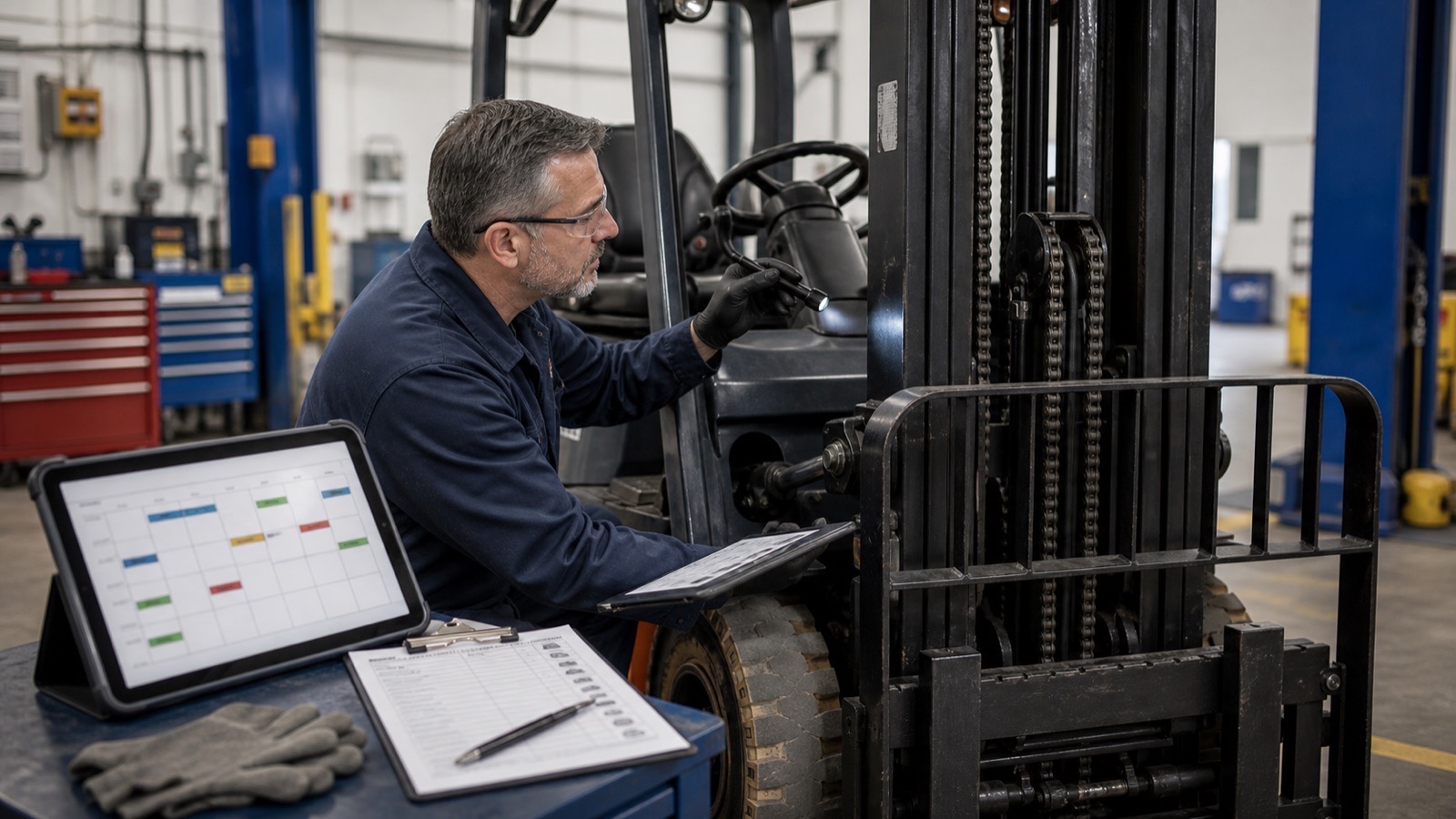
A drilled guard, welded fork, bypassed switch or improvised electrical supply may solve an immediate site problem while changing strength, visibility, protection or control behaviour. The absence of an instant failure does not prove the modification is suitable.
Short answer
Unapproved forklift modifications should trigger identification, isolation where safety may be affected and competent assessment against manufacturer or engineering information. Managers must establish who changed what, why, and whether capacity, guarding, controls, inspection or operator instructions are affected. Informal reversal may not be enough if the original component has been weakened.
What this means in practice
A maintenance team drills an overhead guard to mount a terminal used for stock scanning. Months later, cracking appears around the fixing and wiring rubs against the mast view area. The device improved picking, but the installation altered a protective structure and created a new damage path. The correct decision is technical assessment, not tightening the bolts again.
The manager chooses whether to stop the truck, restore approved parts, obtain formal engineering approval or replace the affected component. Document how the change influences examinations and pre-use checks.
Key checks
- Photograph the modification, fixing points, wiring and affected structure.
- Confirm whether forks, mast, carriage, guard, restraint or safety switches are involved.
- Locate manufacturer instructions, approval and revised capacity information where relevant.
- Check cracking, corrosion, chafing, visibility and unintended control interference.
- Record the competent decision, remedial work and inspection implications.
Accessories still need controlled installation. A phone mount, camera, terminal or light can create blind spots, snag points and electrical loading even when it does not alter rated capacity.
Review procurement routes as well as workshop practice. Accessories supplied with a new system can arrive without the truck manufacturer or competent engineer having approved their mounting, wiring or effect on the operator's view.
Common mistakes
Calling a change “temporary” does not reduce its effect on strength or controls. Removing an improvised fitting while leaving drilled holes, cut wires or welded areas unassessed also fails to restore known condition.
What good looks like
Every added or altered component has an approved purpose, fitting method and record. Capacity and inspection information remain accurate, operators understand any changed controls, and pre-use checks cover the installation. Managers can show who authorised the change and why the truck remains suitable.
When to ask WRMH for help
Ask WRMH when an alteration lacks approval, affects a safety-related component or has begun cracking, chafing or interfering with operation. WRMH can identify correct parts, inspect the truck and help establish repair and examination implications. This improves compliance evidence and prevents an improvised solution causing wider damage.
walk the fleet for non-standard holes, welds, wiring and bypasses, then quarantine any safety-related change until assessed.
Manager decision and evidence
Unapproved forklift modifications create damage and compliance risk becomes practical when a report creates actions: what can keep working, what must stop, who owns each defect and how completion will be evidenced. For unapproved forklift modifications create damage and compliance risk, the compliance question concerns inspection evidence, defect ownership and confident operating status. Keep unapproved forklift modifications create damage and compliance risk practical by stating what is affected, how urgent it is and what happens next. Reviewing unapproved forklift modifications create damage and compliance risk, test unapproved forklift modifications create damage and compliance risk at the handover of defect ownership between operations and maintenance. The manager reviewing unapproved forklift modifications create damage and compliance risk should photograph the condition and record when it appears, then confirm the finding with the operator and the supervisor independently. Test whether the facts distinguish a cause of unapproved forklift modifications create damage and compliance risk from a symptom created elsewhere in the operation. Compare the finding with records taking too long to retrieve during review.
Weak control of unapproved forklift modifications create damage and compliance risk can leave unsafe equipment in use, create audit gaps, interrupt production and expose managers after an inspection challenge. For unapproved forklift modifications create damage and compliance risk, record which option was chosen, why the other routes were rejected and when the conclusion will be reviewed. The manager should record who owns the action, what evidence will confirm it has worked and when the decision will be reviewed.
For unapproved forklift modifications create damage and compliance risk, this extra discipline keeps a useful article from ending as general guidance. It gives operations, maintenance and safety teams one shared basis for deciding what changes now and what evidence should be retained.