
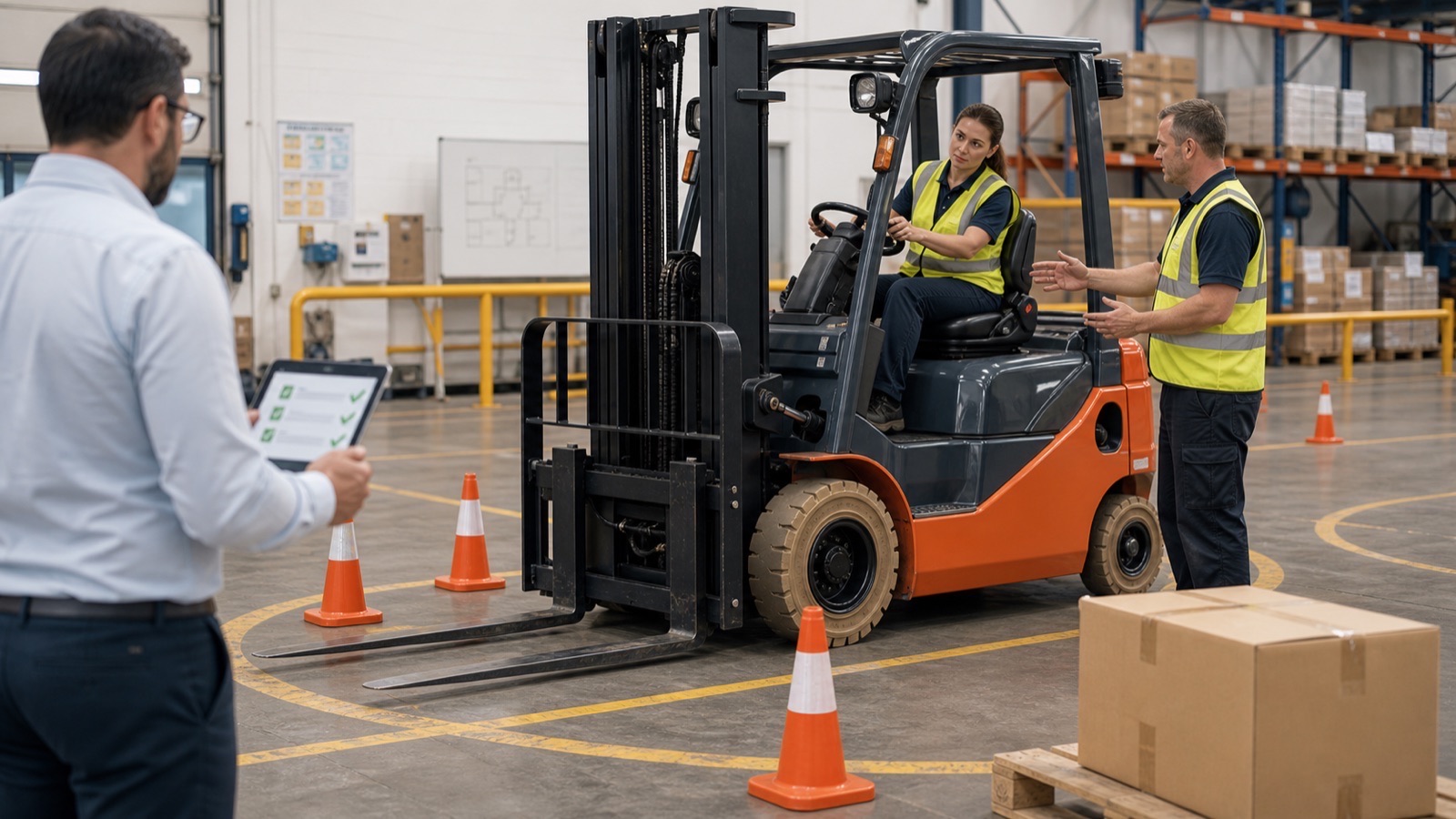
Fork and pallet damage often begins during the final few centimetres of load engagement. Entering off-centre, using the fork tips to push, lifting before full insertion or relying on sideshift to correct a poor approach transfers avoidable force into the pallet, carriage and attachment.
Short answer
Operators should approach squarely, set fork spacing for the pallet, level the forks, insert them to the correct depth and confirm load stability before lifting. Repeated heel wear, bent tips, split pallet blocks or damaged attachment faces indicate that the engagement method or load presentation needs review.
What this means in practice
In a food warehouse, hurried entry into tight drive-in racking causes operators to catch pallet blocks with one fork. The immediate result is damaged packaging and rejected pallets; over time, side loading also affects fork alignment and carriage wear. Slowing the final approach and correcting pallet presentation protects both product and truck.
The manager decision is whether the operator needs task-focused coaching, the pallet quality is unacceptable, the fork spacing or attachment is wrong, or the truck cannot align properly in the available aisle.
Key checks
- Inspect fork tips, heels and locking pins for asymmetric damage.
- Check pallet entry height, fork spacing and insertion depth for the load type.
- Observe whether operators push or straighten loads with fork tips.
- Review sideshift use during entry rather than after the truck is aligned.
- Compare damage by pallet supplier, rack location and truck attachment.
Common mistakes
Replacing damaged forks without observing the load approach restores the truck but leaves the damaging technique in place. Another mistake is treating every broken pallet as operator error when pallet dimensions or condition do not match the load and forks.
What good looks like
Fork wear is even, pallet damage is recorded by cause, and operators can demonstrate square approach and full engagement on the actual task. Supervisors know when the correct answer is coaching, pallet rejection, attachment adjustment or a truck and aisle review.
When to ask WRMH for help
Ask WRMH when fork, carriage or attachment repairs repeat or product damage clusters around one handling task. WRMH can inspect the affected equipment and provide training around the load and attachment involved, helping the site correct technique without overlooking pallet quality or specification problems.
observe ten load engagements at the task with the highest pallet damage and record exactly where contact begins.
Manager decision and evidence
Forks wear where they meet the ground and where the heel takes repeated load stress. A small loss of fork thickness can reduce safe strength, while bent tips, damaged locks or mismatched pairs can make loads unstable or harder to position accurately. For poor load engagement habits damage forks, pallets and attachments, the training question is competence for the exact truck, task, route and record managers must evidence. A stronger decision on poor load engagement habits damage forks, pallets and attachments connects the technical point to the movement, record or cost it changes. Reviewing poor load engagement habits damage forks, pallets and attachments, the operational check for poor load engagement habits damage forks, pallets and attachments belongs at the allocation of operators to trucks at the start of shift, where the site can compare the latest observation with the previous three records before it observe the task during a normal busy period rather than an empty-site trial. The process for poor load engagement habits damage forks, pallets and attachments needs an owner, usable evidence and a review point. Look for damage rising after operators change truck category as a confirming sign.
Poor fork condition can lead to dropped loads, pallet damage, failed inspection findings and unsafe handling. It can also make operators compensate with poor technique, which increases racking, pallet and product damage. The next step for poor load engagement habits damage forks, pallets and attachments may be to stop, observe, repair, train, inspect, hire or replace; site facts should decide which route is proportionate. The manager should record who owns the action, what evidence will confirm it has worked and when the decision will be reviewed.
For poor load engagement habits damage forks, pallets and attachments, this extra discipline keeps a useful article from ending as general guidance. It gives operations, maintenance and safety teams one shared basis for deciding what changes now and what evidence should be retained.