
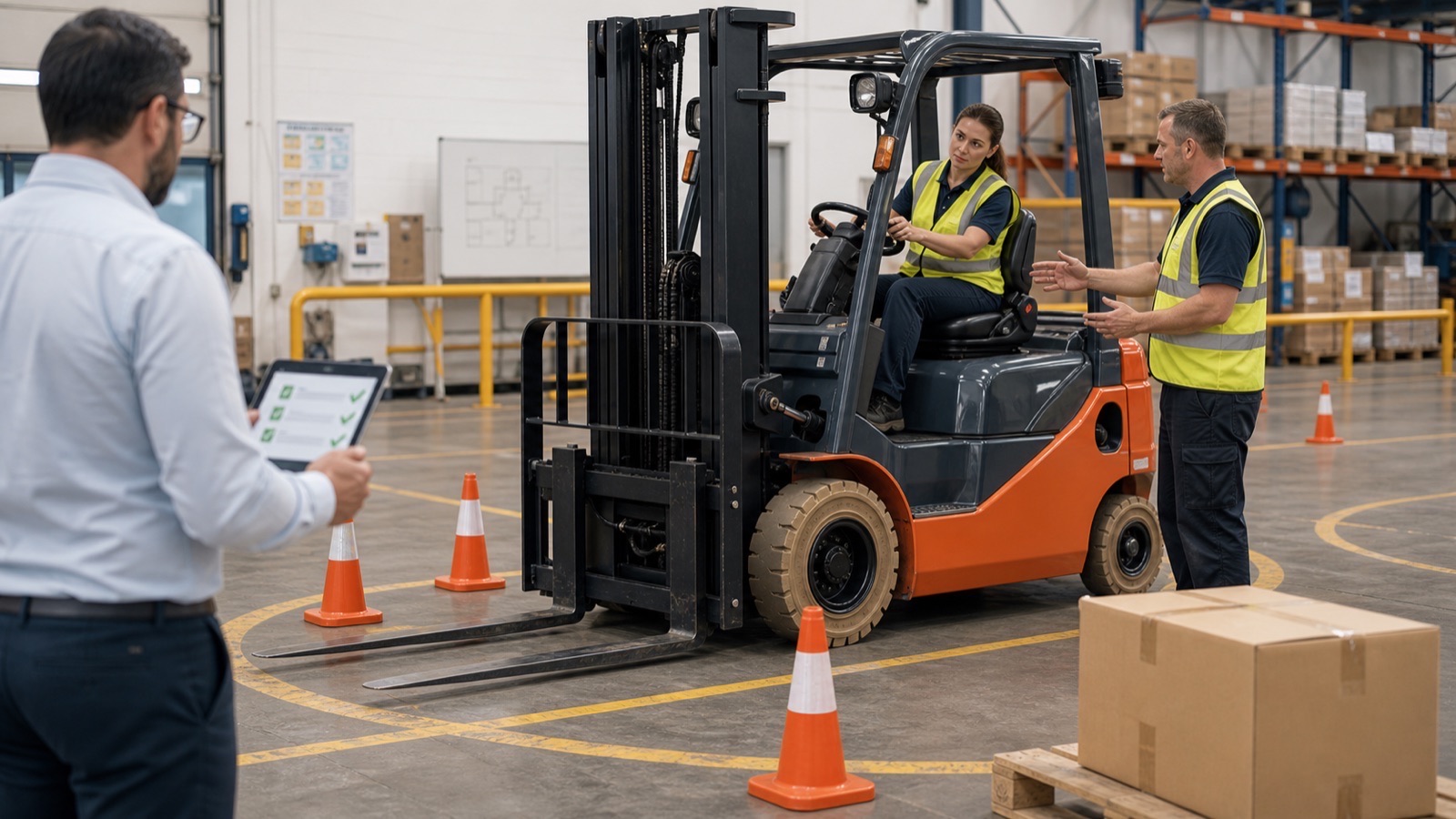
Unsafe habits rarely begin with a dramatic incident. They often appear as gradually sharper turns, incomplete pre-use checks, elevated travel loads or informal shortcuts that become normal because nobody addresses them consistently.
Short answer
A supervisor should intervene immediately when a behaviour creates imminent danger, breaches a clear site rule or suggests the operator cannot control the truck or load. Lower-level drift should still be addressed promptly through a recorded conversation, observation and proportionate decision on briefing, familiarisation, reassessment or refresher training.
What this means in practice
On a drinks warehouse back shift, a competent counterbalance operator begins travelling with loads high enough to see beneath them because the dispatch lane is congested. The supervisor should stop the movement and reset the safe route, not wait for a scheduled training review. The pressure explains the shortcut but does not make it acceptable.
The manager decision is whether the operator knew the correct method but departed from it, has lost practical competence, lacks site-specific familiarisation or is being pushed by a workflow that makes safe practice difficult. Each cause needs a different response and evidence.
Key checks
- Define behaviours that require an immediate stop rather than later coaching.
- Record the observed task, truck category, load and route conditions.
- Ask the operator to explain the decision before choosing corrective action.
- Check whether other operators use the same shortcut under the same pressure.
- Set and document the route back to authorised operation.
Common mistakes
Waiting for damage before acting teaches the team that a shortcut is tolerated until it produces a bill. The opposite mistake is sending an operator for generic retraining when a blocked route, unclear rule or unsuitable truck caused the behaviour.
What good looks like
Supervisors use consistent intervention thresholds, operators understand why work was stopped, and the response matches the evidence. Records show the observed behaviour, immediate control, competence decision and follow-up observation rather than only a disciplinary note.
When to ask WRMH for help
Ask WRMH when observation suggests an operator may need formal reassessment, category conversion or targeted refresher training. WRMH can help distinguish a competence gap from a familiarisation or site-control issue and deliver training around the truck and task involved, giving managers stronger evidence before authorisation resumes.
agree the five behaviours your supervisors are expected to stop immediately and the evidence required before an operator returns to the task.
Manager decision and evidence
Should a supervisor intervene in unsafe forklift habits affects confidence, damage, pedestrian behaviour, pre-use checks, battery care, productivity and the manager's ability to show competence if questioned. For should a supervisor intervene in unsafe forklift habits, the training question is competence for the exact truck, task, route and record managers must evidence. Managers reviewing should a supervisor intervene in unsafe forklift habits should be able to point to the observation, action and risk reduced. Reviewing should a supervisor intervene in unsafe forklift habits, test should a supervisor intervene in unsafe forklift habits at the booking decision between novice, refresher and conversion training. The manager reviewing should a supervisor intervene in unsafe forklift habits should photograph the condition and record when it appears, then record the decision, owner and review date beside the original evidence. Managers need an agreed intervention point for should a supervisor intervene in unsafe forklift habits, supported by observable evidence. Compare the finding with attachments introduced without conversion training.
Weak control of should a supervisor intervene in unsafe forklift habits can leave operators on unfamiliar trucks, records out of date, unsafe habits uncorrected and supervisors unsure who can do the job. For should a supervisor intervene in unsafe forklift habits, record which option was chosen, why the other routes were rejected and when the conclusion will be reviewed. The manager should record who owns the action, what evidence will confirm it has worked and when the decision will be reviewed.
For should a supervisor intervene in unsafe forklift habits, this extra discipline keeps a useful article from ending as general guidance. It gives operations, maintenance and safety teams one shared basis for deciding what changes now and what evidence should be retained.