
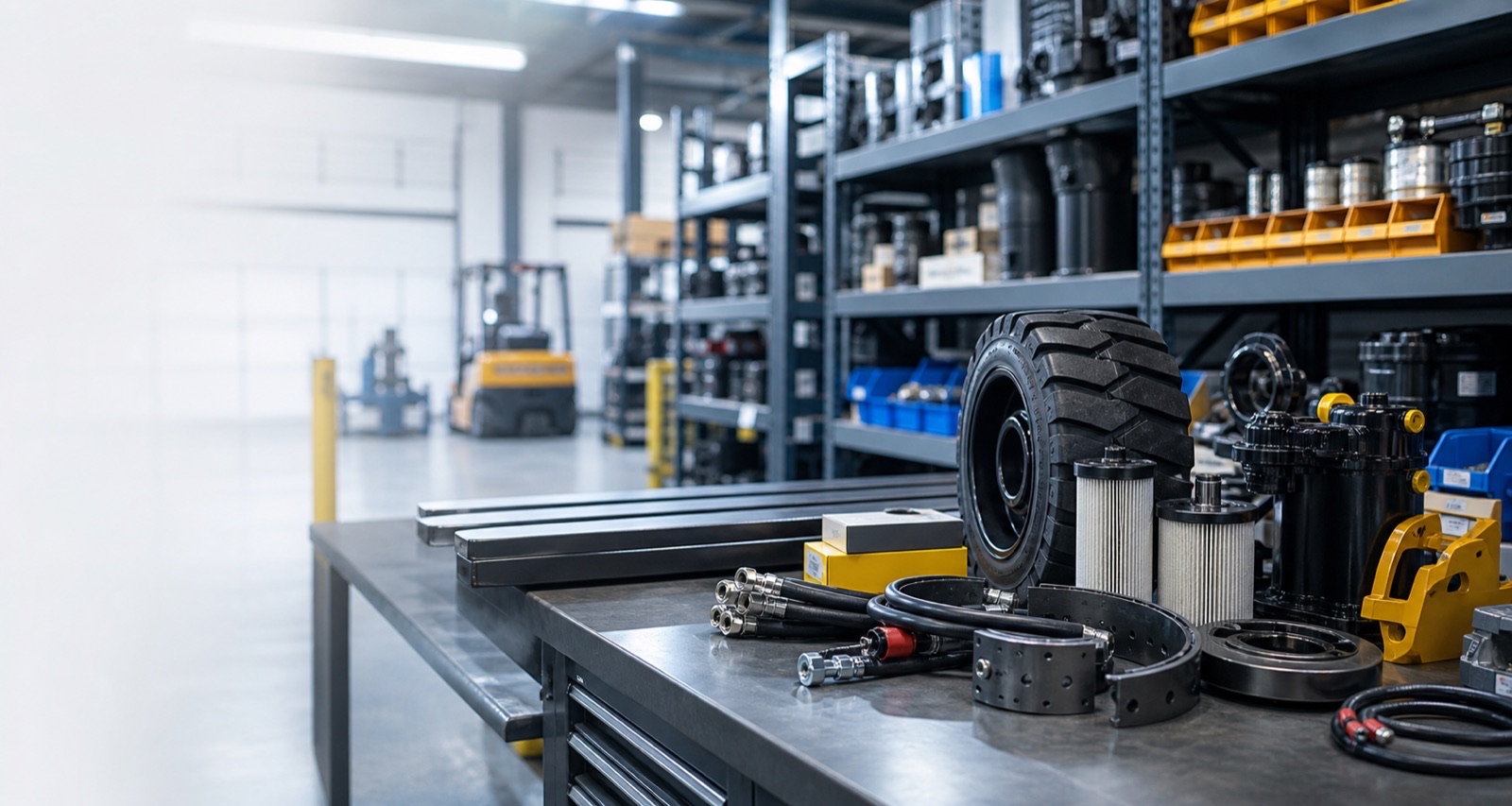
Parts records are easy to overlook when the pressure is to get the forklift back to work. Yet the record of what was fitted, why it was fitted, who fitted it and what evidence supported the choice can become important later for warranty, compliance, repeat fault diagnosis and cost control.
Short answer
Managers should keep a clear record of the truck, serial number, part supplied, part number, supplier, date fitted, fitting route, warranty position, fault reason and any test or engineer notes. That record helps prove what happened and gives the business a better starting point if the fault returns.
What this means in practice
A part may solve the immediate fault, but the story is not finished once the truck moves again. If the same issue returns, managers need to know whether the same component failed, whether the part was correct, whether the surrounding system caused the failure or whether the truck application is creating repeated stress.
Records also matter where parts interact with safety and compliance. Chains, forks, brakes, tyres, mast rollers, hydraulic hoses, controllers and restraint components can affect how confidently the truck is returned to work. If the site cannot show what was fitted and why, it becomes harder to evidence control after a defect, audit query or warranty discussion.
Key checks
- Record truck make, model, serial number and fleet number.
- Keep the part number, description, supplier and warranty term.
- Note whether the part was self-fitted or engineer-fitted.
- Capture the reason for replacement and any fault symptoms.
- Link safety-critical parts to inspection, defect and test evidence where relevant.
Why this matters beyond admin
Good parts records help managers separate normal wear from repeat failure. A tyre replaced after years of use tells one story. A tyre replaced repeatedly on the same route tells another. A controller replaced once may be a repair. A controller replaced again after battery or wiring symptoms were ignored may point to a deeper diagnostic issue.
Warranty claims also depend on evidence. If the site can show the correct part was supplied, fitted properly and used in the right application, the conversation is much clearer. Without records, warranty becomes slower and more subjective, especially where damage, misuse or incorrect fitting may be questioned.
Where compliance links into parts
Parts records are not a substitute for LOLER, servicing or defect management, but they support those controls. If an inspection finds a defect and a part is fitted, the manager should be able to connect the defect, action, part and return-to-work decision. That creates a stronger evidence trail than a loose invoice sitting away from the truck file.
This is especially useful for mixed fleets and multi-site operations. Different makes, ages and departments can create scattered records unless someone keeps the parts story tied to the asset. A simple record helps future engineers, supervisors and finance teams understand why money was spent and what risk was reduced.
Common mistakes
A common mistake is keeping only the invoice. An invoice proves money was spent, but it may not prove why the part was needed, whether it was safety critical, who fitted it or how the truck was checked afterwards. Managers need the operational record, not just the purchasing record.
What good looks like
Good control means the manager can open the truck file and see the part history, fitting route, warranty position, defect link and next decision point. If the fault returns, the site does not restart from memory; it restarts from evidence.
When to ask WRMH for help
Ask WRMH for help when parts history is scattered, warranty confidence is weak or repeat faults are hard to explain. WRMH can help identify parts accurately, support supply and fitting decisions, and use parts history alongside service records to reduce repeat downtime and strengthen evidence.
Practical next step
If parts decisions are becoming hard to defend, start with one critical truck. Pull together the last parts supplied, fitting route, fault symptoms and warranty notes. WRMH can help turn that into a clearer record and a better decision for the next repair.
Helpful next step: ask WRMH to help connect your parts history to warranty, compliance and repeat fault control.