
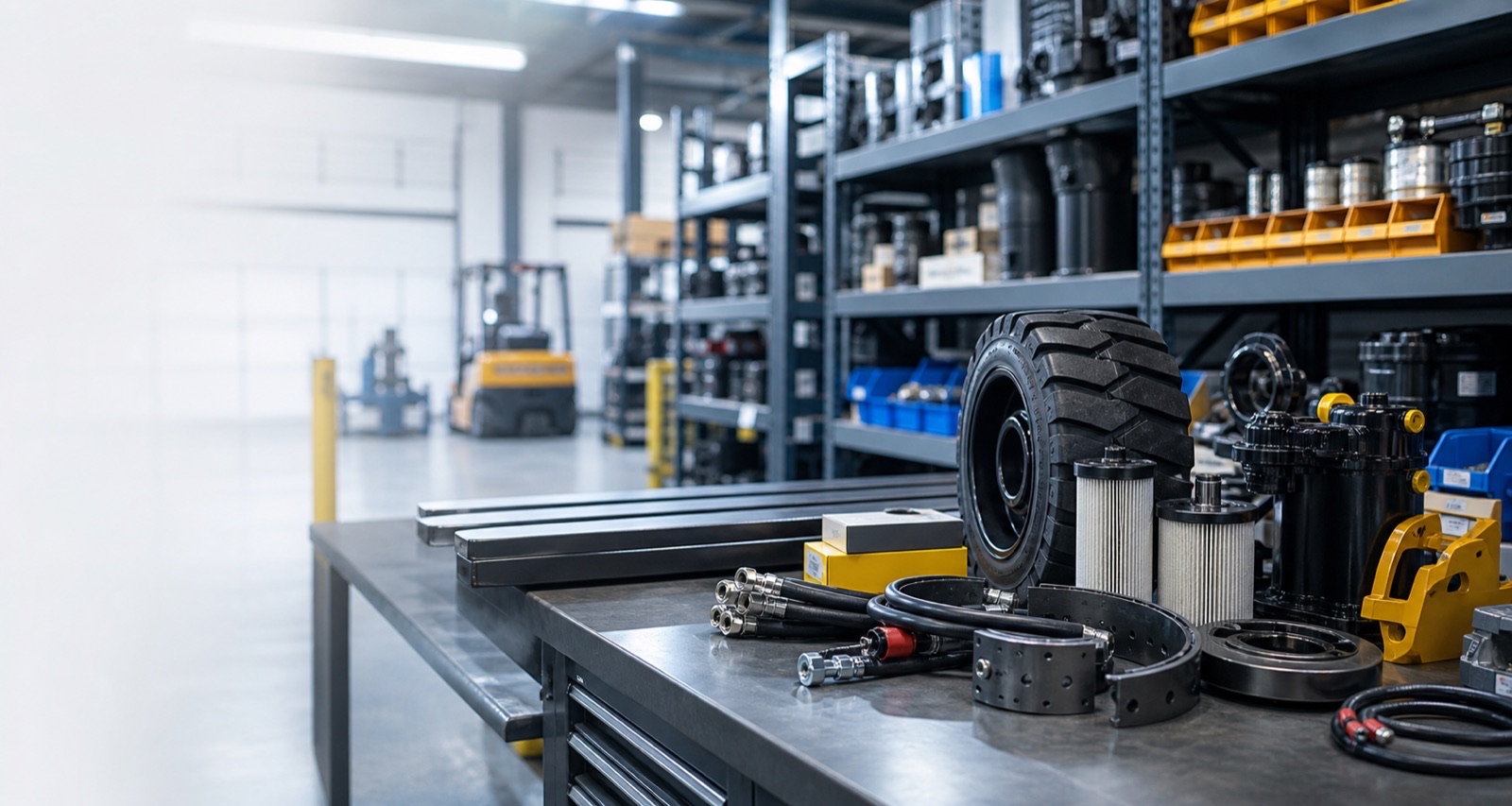
Holding spares on site can protect uptime, but it can also tie up money, create obsolete stock and give a false sense of control. The best answer is not to keep everything. It is to hold the right items for the trucks, risk and response route on that site.
Short answer
Managers should hold forklift spares on site only where the part is frequently used, easy to identify, safe to store, unlikely to become obsolete, and can be fitted by the right person quickly enough to reduce downtime. Other parts are better managed through fast supplier access, engineer van stock or planned ordering.
What this means in practice
A food production site with several powered pallet trucks may sensibly hold selected wheels, charger leads or simple consumables if trained maintenance staff can fit them. A mixed fleet with different makes, mast variants and older trucks may find that too much stock becomes a guessing game. The same shelf can hold confidence or confusion depending on how well it is controlled.
The manager decision is whether a spare part genuinely shortens the repair route. If the part needs specialist diagnosis, engineer fitting, calibration, warranty evidence or exact serial-number matching, having something similar in a store may not help. It may even delay the correct WRMH route if the site tries the wrong component first.
Key checks
- List the trucks and parts that have caused repeat downtime in the last year.
- Separate simple consumables from safety-critical or serial-specific components.
- Confirm who can fit each spare and how return-to-work checks are recorded.
- Check shelf life, storage condition, warranty and obsolescence risk.
- Compare stock cost against WRMH delivery, engineer van stock and hire-cover options.
The first useful question is frequency. If the same wheel, filter, charger lead, contact tip, light lens or restraint component appears repeatedly across similar trucks, a controlled local stock position may make sense. If a part has failed once in five years, holding it may be dead money.
The second question is fit confidence. A site can safely hold simple, clearly identified items for a standardised fleet. A mixed-age fleet can be harder because two trucks from the same manufacturer may need different parts due to mast type, model variant, serial range or battery configuration. Stock only helps when people know exactly which truck it fits.
The third question is fitting route. A spare that sits on site but still needs engineer fitting may still be valuable if it removes a delivery delay. But the plan must include who books the engineer, who isolates the truck, what evidence is required and whether the truck can work until fitting. A part on a shelf is not a repair plan by itself.
The fourth question is risk. Brakes, chains, forks, steering, hydraulics, controllers, safety devices and lifting components need stronger control than low-risk consumables. For these items, WRMH support can protect the business by confirming the part, advising on quality and making sure the fitting route matches the safety consequence.
Managers should also review unused stock. If a spare has not moved, no longer matches the fleet or cannot be traced to a truck, it may be creating clutter rather than resilience. A simple quarterly review can prevent stores from becoming a museum of old decisions.
Common mistakes
A common mistake is buying spares after one painful breakdown without checking whether the same issue is likely to happen again. That can create expensive shelf stock while the real risk remains poor identification, weak defect reporting or an ageing truck that needs a wider decision.
What good looks like
Good control means the site knows which spares it holds, which trucks they fit, who can fit them, how they are recorded and when WRMH should be involved. Stock is there to shorten a known repair route, not to create another layer of guesswork.
When to ask WRMH for help
Ask WRMH for help when you want to reduce downtime without filling stores with the wrong parts. WRMH can review your fleet, repeat repairs and critical trucks, then help decide what should be held on site, what should be covered by supplier access and what should be planned through engineer attendance.
ask WRMH to review your most common forklift parts delays before building or expanding site spares stock.