
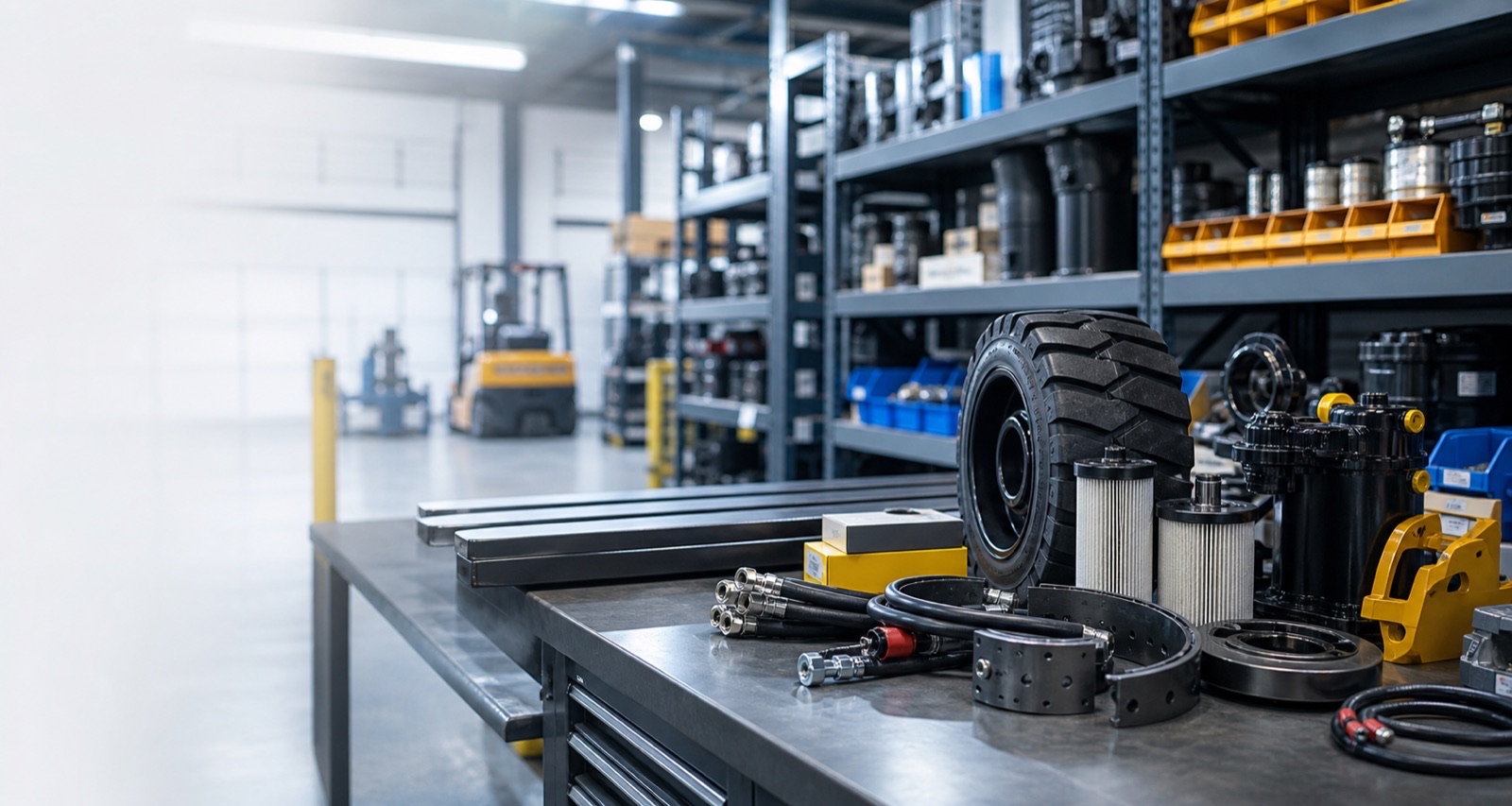
Photos can make parts identification much faster, but only when they show enough context. A close-up of a broken component may prove something is damaged without proving which version, fitting position or truck variant is involved.
Short answer
Forklift part photos need context because many components look similar when removed from the truck. The best photo set shows the truck data plate, the part, the area it came from, surrounding fittings, visible markings and the fault or damage from more than one angle.
What this means in practice
If a warehouse sends only a close-up of a hydraulic hose end, the supplier may not know the hose length, routing, fitting type or whether the hose has been modified before. A wider image showing the mast, fitting route and connection points gives WRMH a much better chance of identifying the correct hose and advising whether the truck should stay out of use.
The manager decision is whether photos are being used as evidence or decoration. Useful images reduce back-and-forth questions, improve first-time part matching and help the site choose between self-fitting, engineer fitting or further diagnosis.
Key checks
- Take one clear photo of the truck data plate and serial number.
- Photograph the part close up, then again in its fitted position.
- Include any labels, casting numbers, damage, wear marks or connectors.
- Show surrounding parts so the fitting route and location are clear.
- Tell WRMH whether the part is still fitted, removed or preventing truck use.
Common mistakes
A common mistake is sending a single zoomed image that removes the part from its operational setting. The part may be visible, but the information needed to identify the correct replacement is missing.
What good looks like
Good control means the photo set lets someone who has never seen the truck understand what the part is, where it fits, why it matters and what risk the site is managing.
When to ask WRMH for help
Ask WRMH for help when photos are the fastest way to start the enquiry but you are unsure what to capture. WRMH can guide the image set, identify the component more accurately and reduce the risk of ordering a similar-looking part that does not fit.
send one data plate image, two contextual images and one close-up before asking for price and availability.
Manager decision and evidence
Forklift part photos need context, not just close-ups affects the operation when the issue changes truck availability, route planning, operator confidence, repair timing or compliance evidence. For forklift part photos need context, not just close-ups, ask where it touches the working day rather than whether it sounds technical. For forklift part photos need context, not just close-ups, the parts question covers identification, quality, availability and the correct fitting route. For forklift part photos need context, not just close-ups, managers should use site evidence rather than habit or assumption. Reviewing forklift part photos need context, not just close-ups, use the serial-number check against the component removed from the truck as the practical test point: compare the latest observation with the previous three records, then separate the truck symptom from the route, load and operator conditions. A manager should be able to connect the sign to its likely cause before deciding the response to forklift part photos need context, not just close-ups. Check the result against old components discarded before comparison.
If forklift part photos need context, not just close-ups is handled loosely, managers can spend money without solving the real constraint, leave uncertainty in the records or keep a truck working in conditions that deserve a clearer decision. The next step for forklift part photos need context, not just close-ups may be to stop, observe, repair, train, inspect, hire or replace; site facts should decide which route is proportionate. The manager should record who owns the action, what evidence will confirm it has worked and when the decision will be reviewed.
For forklift part photos need context, not just close-ups, this extra discipline keeps a useful article from ending as general guidance. It gives operations, maintenance and safety teams one shared basis for deciding what changes now and what evidence should be retained.