
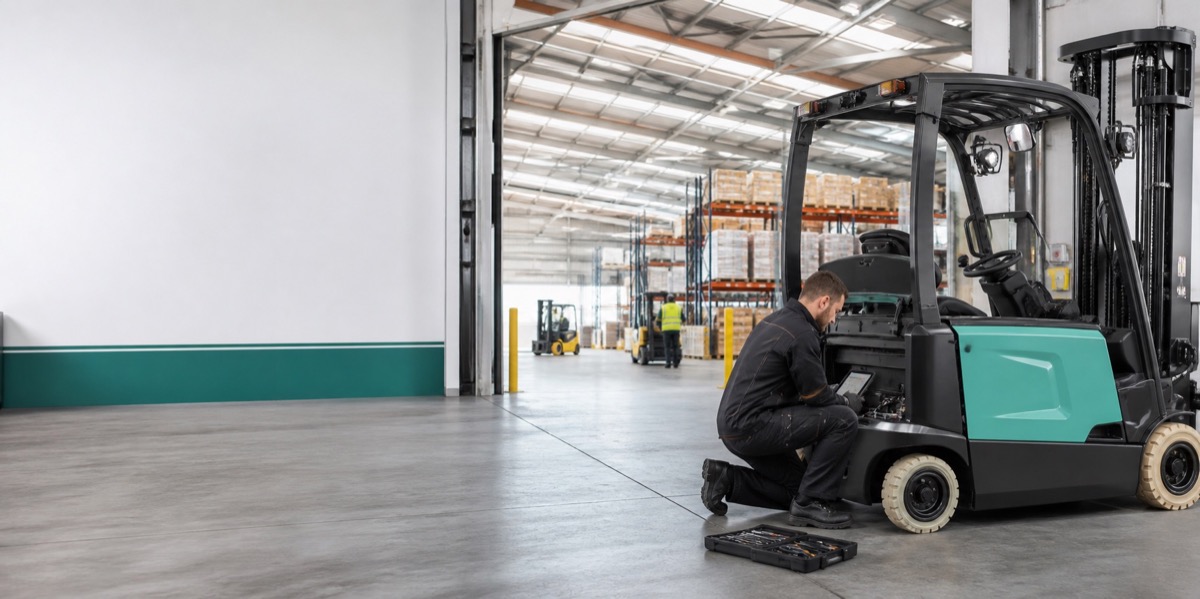
When a lift, tilt or sideshift function reaches the end of its movement, continuing to hold the control can keep the hydraulic system working against its limit. The relief valve may make the behaviour seem normal, but repeated unnecessary operation creates heat and loads pumps, hoses, seals and oil.
Short answer
Holding forklift hydraulic controls at full travel can accelerate wear when the operator continues commanding a function after the mast or attachment has stopped. The relief system protects against excessive pressure; it is not intended to be used as a routine position indicator. Operators should release the control when the required movement is complete and report new noise, heat or sluggish response.
What this means in practice
In a paper warehouse, operators use full sideshift to align reels at the same storage position. One driver holds the lever against the stop while checking the rack beam, producing a prolonged hydraulic whine on each placement. Later in the shift, sideshift response slows and oil temperature rises. The habit has not caused an immediate breakdown, but it adds avoidable pressure and heat to a repetitive task.
The manager must decide whether the cause is control technique, poor load presentation requiring constant full travel, a sticky valve or an attachment fault. Observe the function from cold and warm conditions and note exactly when the sound begins.
Key checks
- Time how long each control remains operated after physical movement stops.
- Identify whether lift, tilt, sideshift or another attachment function creates the noise.
- Compare oil temperature, speed and sound early and late in the shift.
- Check whether the task repeatedly demands the full limit of attachment travel.
- Record leaks, hose movement and seal condition near the affected function.
Managers should not ask operators to diagnose relief pressure. Their role is to recognise unnecessary control holding and report a change in behaviour. Technical pressure checks and adjustments belong with a competent engineer.
Common mistakes
Accepting a relief-valve whine as confirmation that the function is fully positioned normalises avoidable loading. The opposite mistake is blaming the operator when a valve sticks or the attachment reaches its limit prematurely; observation and technical checks must agree.
What good looks like
Operators release controls as movement finishes, unusual hydraulic noise is reported with the exact function and operating condition, and supervisors can identify tasks that constantly use full attachment travel. Maintenance records show whether heat, leaks or sluggish response changed after coaching or repair, allowing the manager to defend the selected action.
When to ask WRMH for help
Ask WRMH when hydraulic whine becomes prolonged, functions slow as the truck warms or leaks and heat appear around a repeatedly used circuit. WRMH can test the system, identify whether the relief, valve, pump or attachment needs attention and compare the finding with operator use. That improves diagnosis and prevents coaching from masking a mechanical fault—or a repair from leaving the damaging habit unchanged.
Helpful next step: record a short, safe observation of the exact function, duration and temperature condition that produces the hydraulic noise.