
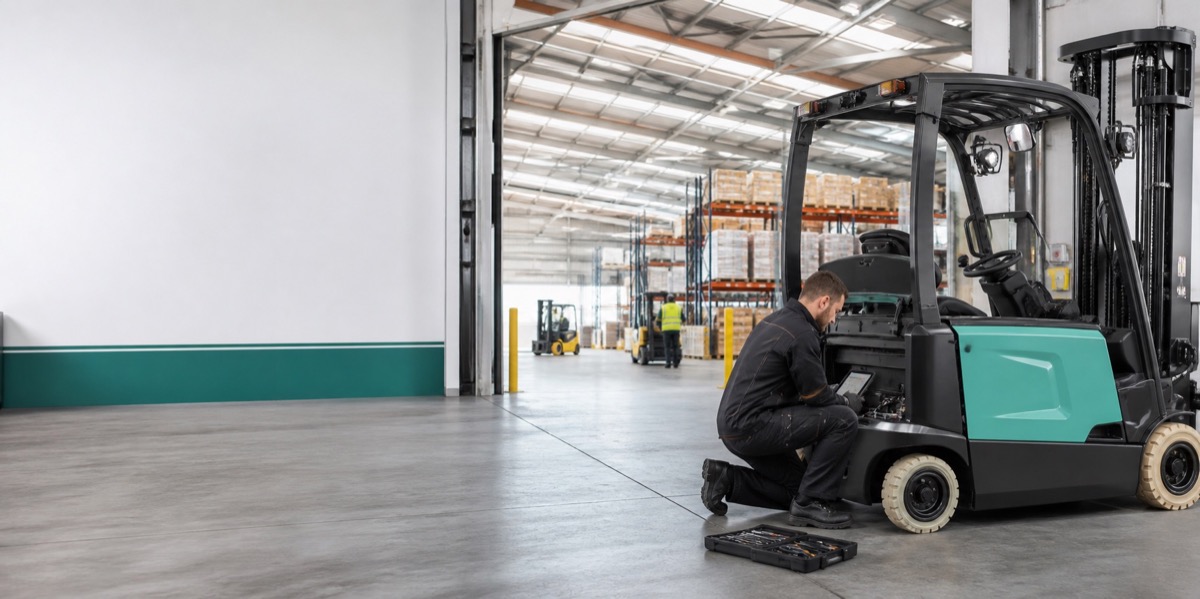
Broken pallet boards, nails, banding, metal offcuts and packaging blocks affect forklifts differently from ordinary dust. Wheels can embed sharp material, debris can strike low-mounted components, and operators may swerve into another hazard when a route is not cleared promptly.
Short answer
Warehouse debris creates forklift damage when the material is hard, sharp or large enough to cut tyres, jam wheels or contact the underside. Managers should record the debris type and source, not just clean the final location. Repeated tyre or underbody repairs justify a route-based prevention decision rather than treating each item as random litter.
What this means in practice
An engineering warehouse moves stillages past a decanting area where metal banding is cut. A short piece becomes embedded in a solid tyre, then scores the floor and works deeper during the shift. The truck is removed before a dispatch run, and a tyre replacement is needed. Sweeping the aisle fixes the moment; changing banding collection controls the source.
The manager must decide whether cleaning frequency, waste containment, pallet rejection or route separation needs changing. Where debris may have struck brakes, steering, battery trays or hydraulic components, the truck also needs an operating-status decision.
Key checks
- Photograph and classify debris found near each tyre or underbody defect.
- Trace nails, board fragments, banding or offcuts to the generating task.
- Inspect tyre cuts, embedded objects, wheel rotation and accessible underside contact marks.
- Compare incidents by route, shift, waste process and cleaning interval.
- Define which debris contact requires isolation and technical inspection.
Operators should avoid debris where it is safe to do so, but route design must not rely on sudden steering around unseen objects. Reporting should trigger removal for the whole route and inspection of the affected truck.
Different debris needs different control. Timber fragments point towards pallet condition and rejection, metal offcuts towards production containment, and stones near doorways towards yard cleaning or wheel-track maintenance. Categorisation makes the corrective action specific.
Common mistakes
Recording “puncture” without retaining the object loses evidence about its source. Another mistake is asking operators to pick debris from beneath a truck or wheel without isolation and a safe removal method.
What good looks like
Damage records identify debris type and origin, generating tasks have contained waste points, and routes are checked at intervals linked to workload. Operators know the stop threshold and supervisors verify removal. Managers can show whether tyre and underbody incidents fell after a specific source control.
When to ask WRMH for help
Ask WRMH when embedded debris, changed wheel behaviour or underside contact makes safe use uncertain. WRMH can inspect tyres, wheels and exposed components and interpret the damage pattern. This improves fault visibility and helps managers connect the repair to a practical route or waste-control action.
retain and photograph the next damaging object, then trace the process that placed it in the truck route.