
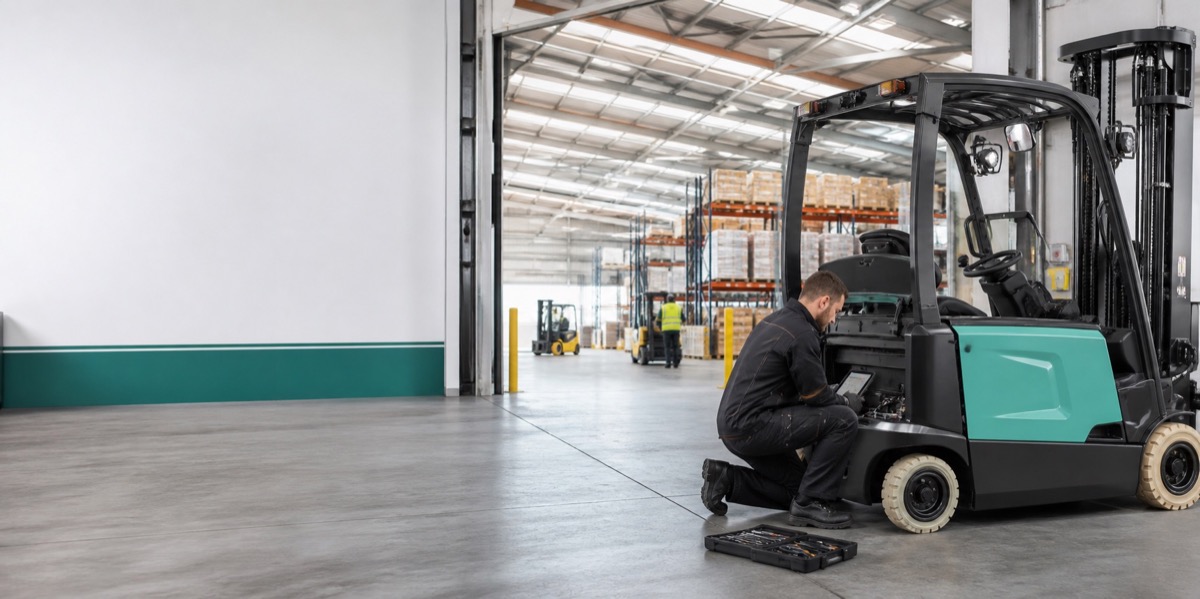
A scrape, vibration or stiff control noticed near the end of a shift can become expensive when the next operator receives only the key. The handover is the point where an observation should become a visible defect decision before another eight hours of use changes the damage.
Short answer
A forklift handover should identify the truck, hours, new damage, warning lights, changes in sound or control, outstanding defects and current operating status. The incoming operator still completes a pre-use check; the handover ensures recent symptoms are not lost between shifts.
What this means in practice
A manufacturing operator feels a new vibration after clipping floor debris but sees no obvious tyre cut. If the observation is handed over and the truck is checked, a loose wheel or damaged tyre may be contained. If the next shift keeps running, wheel, bearing and steering damage can widen the repair and stop production replenishment.
Managers must decide which reports mean stop and isolate, which require engineering advice before use, and which can be monitored under a recorded instruction. That decision cannot be made reliably if the incoming team receives an informal comment with no truck number or symptom detail.
Key checks
- Use the truck asset number and hour-meter reading at every handover.
- Record what changed, when it started and whether it worsens under load.
- Mark the truck status clearly: available, restricted, awaiting advice or isolated.
- Make unresolved defects visible to the incoming supervisor and operator.
- Confirm who owns the engineering call and return-to-service decision.
Common mistakes
Treating a verbal handover as sufficient allows symptoms to change wording or disappear. Another error is assuming the next pre-use check will reveal an intermittent noise or behaviour that only occurs after the truck warms up or carries a load.
What good looks like
The outgoing observation is traceable to a truck and time, the incoming shift sees its status before use, and the site can show who assessed the defect. Minor damage is contained because uncertainty triggers a defined response rather than another shift of hopeful operation.
When to ask WRMH for help
WRMH can help when a handover symptom needs technical triage or the same issue keeps returning without a clear diagnosis. Accurate notes, photographs and operating conditions let WRMH prepare the attendance and identify likely parts, reducing the risk that continued use turns an early warning into a larger repair.
add truck status and defect ownership to the next shift handover sheet, then test whether every incoming operator can find them.
Manager decision and evidence
Shift handovers can stop minor forklift damage becoming a major repair improves when the site captures symptoms, when the fault happens, warning codes, recent service history and what the operator noticed before the engineer attends. For shift handovers can stop minor forklift damage becoming a major repair, the servicing question is whether the symptom leads to a reliable repair or a pattern likely to return. For shift handovers can stop minor forklift damage becoming a major repair, managers should use site evidence rather than habit or assumption. Reviewing shift handovers can stop minor forklift damage becoming a major repair, at the shift handover where a recurring symptom is reported, ask the team to separate the truck symptom from the route, load and operator conditions and confirm the finding with the operator and the supervisor independently. Treat shift handovers can stop minor forklift damage becoming a major repair as a controlled sequence rather than an informal task passed between departments. Do not close the shift handovers can stop minor forklift damage becoming a major repair review without considering repeat callouts against the same asset number.
Poor information about shift handovers can stop minor forklift damage becoming a major repair can turn a straightforward repair into extra attendance time, parts delay, hire cost and loss of confidence. The decision on shift handovers can stop minor forklift damage becoming a major repair is whether the truck can continue, needs controlled monitoring or requires a repair, competence, inspection or equipment response. The manager should record who owns the action, what evidence will confirm it has worked and when the decision will be reviewed.
For shift handovers can stop minor forklift damage becoming a major repair, this extra discipline keeps a useful article from ending as general guidance. It gives operations, maintenance and safety teams one shared basis for deciding what changes now and what evidence should be retained.