
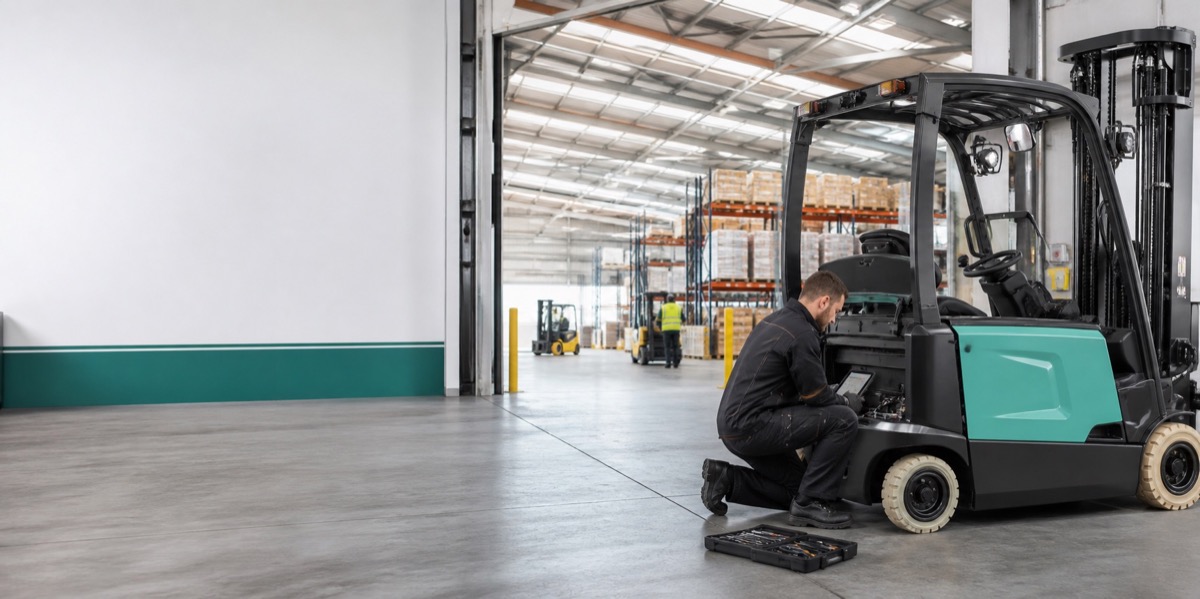
Loose stretch wrap does more than create a housekeeping problem. A rotating wheel or axle pulls film inward, where it can tighten around hubs, disturb seals, retain debris and hide heat or damage until steering, braking or wheel movement changes.
Short answer
Stretch wrap around forklift wheels and axles should be removed and assessed before continued use when it has wound beyond the visible tyre area. Managers need to control both the immediate contamination and the source of loose film. Cutting away the exposed tail may leave compacted material behind a wheel or guard.
What this means in practice
A distribution centre unwraps inbound pallets beside a reach-truck route. Film enters a load-wheel assembly and winds tightly during the shift. The operator later reports a scraping sound and heavier steering. Removal reveals compacted plastic and a damaged seal, taking the truck out during replenishment.
The decision is whether the truck can be safely isolated for inspection, whether technical removal is needed and how waste collection must change. Operators should not reach into wheel areas or work beneath raised components.
Key checks
- Inspect load wheels, steer wheels, hubs and accessible axle areas for wound film.
- Record scraping noise, heat, resistance, leaks or changed steering after contamination.
- Trace loose wrap to unpacking, wrapper cutting and waste-bin positions.
- Confirm who may remove surface debris and when engineering inspection is required.
- Compare contamination frequency by route, shift and pallet-processing point.
Pre-use checks should include visible contamination, but wrap can accumulate during work. A mid-shift trigger is useful in high-volume areas, particularly after a film spill or change in wheel sound.
Track removal findings as maintenance evidence. Recording which wheel contained film, how deeply it travelled and whether a seal or bearing was affected helps prove whether the revised waste arrangement is reducing mechanical exposure.
Common mistakes
Pulling the visible film until it snaps can leave a tight hidden band and create false confidence. Moving the waste bin without changing where pallets are cut may simply spread loose wrap across a longer route.
What good looks like
Film is cut and contained away from truck routes, operators recognise early wheel symptoms, and contaminated trucks follow a defined stop-and-assess rule. Inspection records distinguish surface removal from technical examination. Managers can show the waste source, corrective action and resulting reduction in contamination events.
When to ask WRMH for help
Ask WRMH when wrap disappears behind a wheel, steering or braking changes, heat develops or contamination repeats after clean-up. WRMH can inspect the assembly, remove concealed material safely and identify seal, bearing or brake damage. That supports faster diagnosis and prevents a housekeeping symptom becoming a larger breakdown.
inspect the truck route beside every pallet-unwrapping point and record where loose film first reaches a wheel path.