The problem
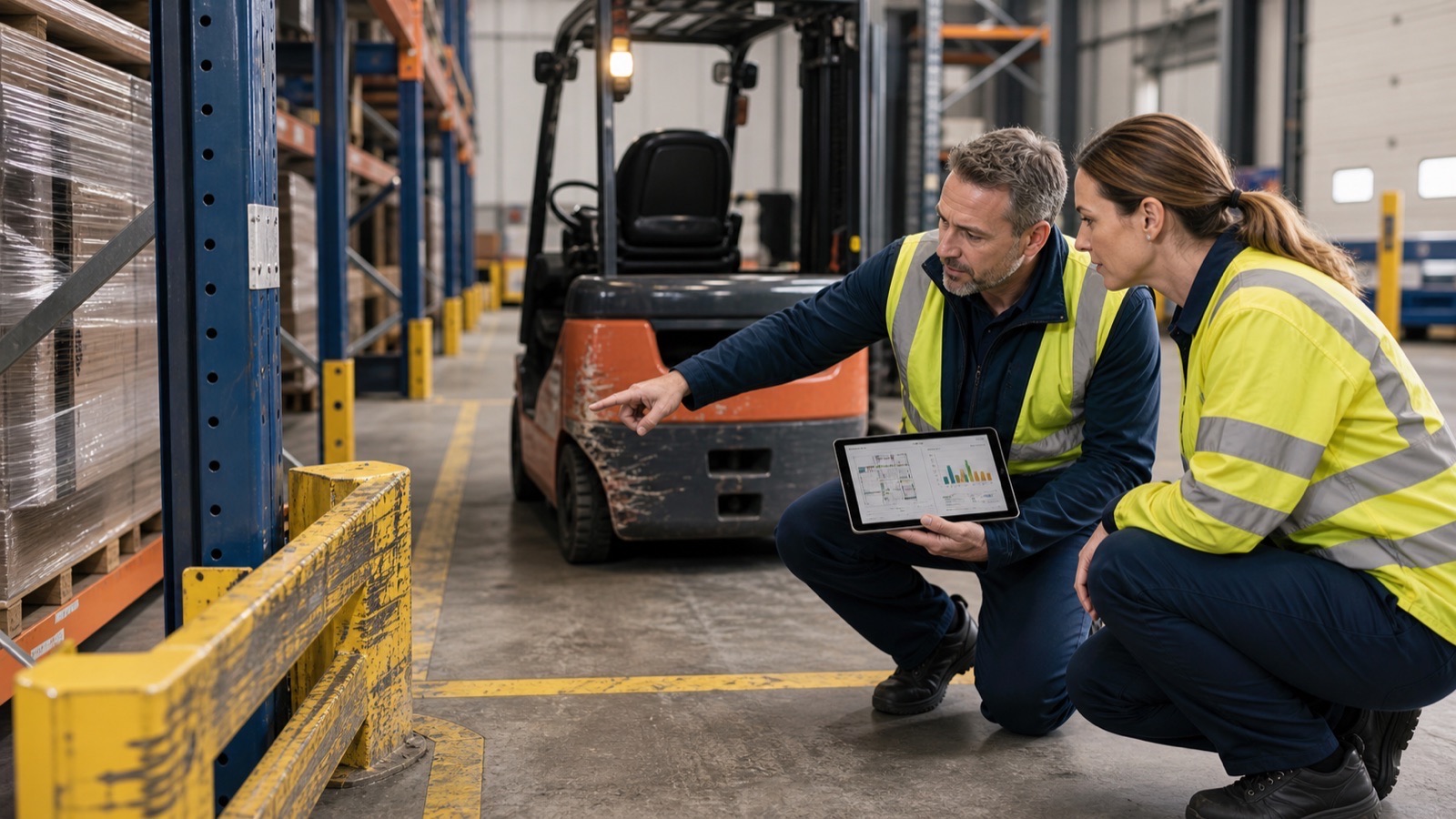
Forklift damage is often logged as separate events: a bent guard, damaged racking, broken lights or another tyre issue. Looked at individually, each repair may seem normal. Looked at together, the pattern can point to a specific route, shift, truck, load type or training gap.
Damage reports often arrive as isolated repairs, which makes each one easier to accept. A light, guard, fork tip or tyre gets fixed and the operation moves on without asking whether the same place or habit is involved. For example, if the same rear light and guard keep being damaged at one chilled-store doorway, the issue may be visibility, doorway protection, route pressure or training rather than unlucky repairs.
That misses the value hidden in the pattern. If the same damage keeps appearing, the site may need a route change, handling change, training conversation or different equipment rather than another identical repair.
How WRMH could help
WRMH can help read the pattern behind repair history. We connect damage, operator needs, truck suitability and site layout, then recommend targeted fixes. That might mean refresher training, a different truck setup, route changes, speed control, improved checks or a planned conversation with supervisors.
Begin by asking the team to group the damage instead of accepting each repair on its own. WRMH can look for repeated locations, shifts, load types or truck behaviours, then target the fix where it will reduce the next incident.
The value lies in connecting the evidence to one proportionate damage control action that the site can implement and measure.
Common mistakes
The wrong response is repairing each incident separately without checking whether the same route, shift or habit is involved. That choice can remove the visible symptom while leaving the operating cause, owner and next review point unresolved.
When to ask WRMH for help
External WRMH support is useful when the same type of damage keeps appearing and the site needs to understand the pattern. The useful outcome is a damage control decision tied to the truck, task and evidence, with a clear owner for what changes next.
Further reading
Build your understanding of this topic
These related knowledge base articles give you more context, checks and practical language before you decide what to do next.