
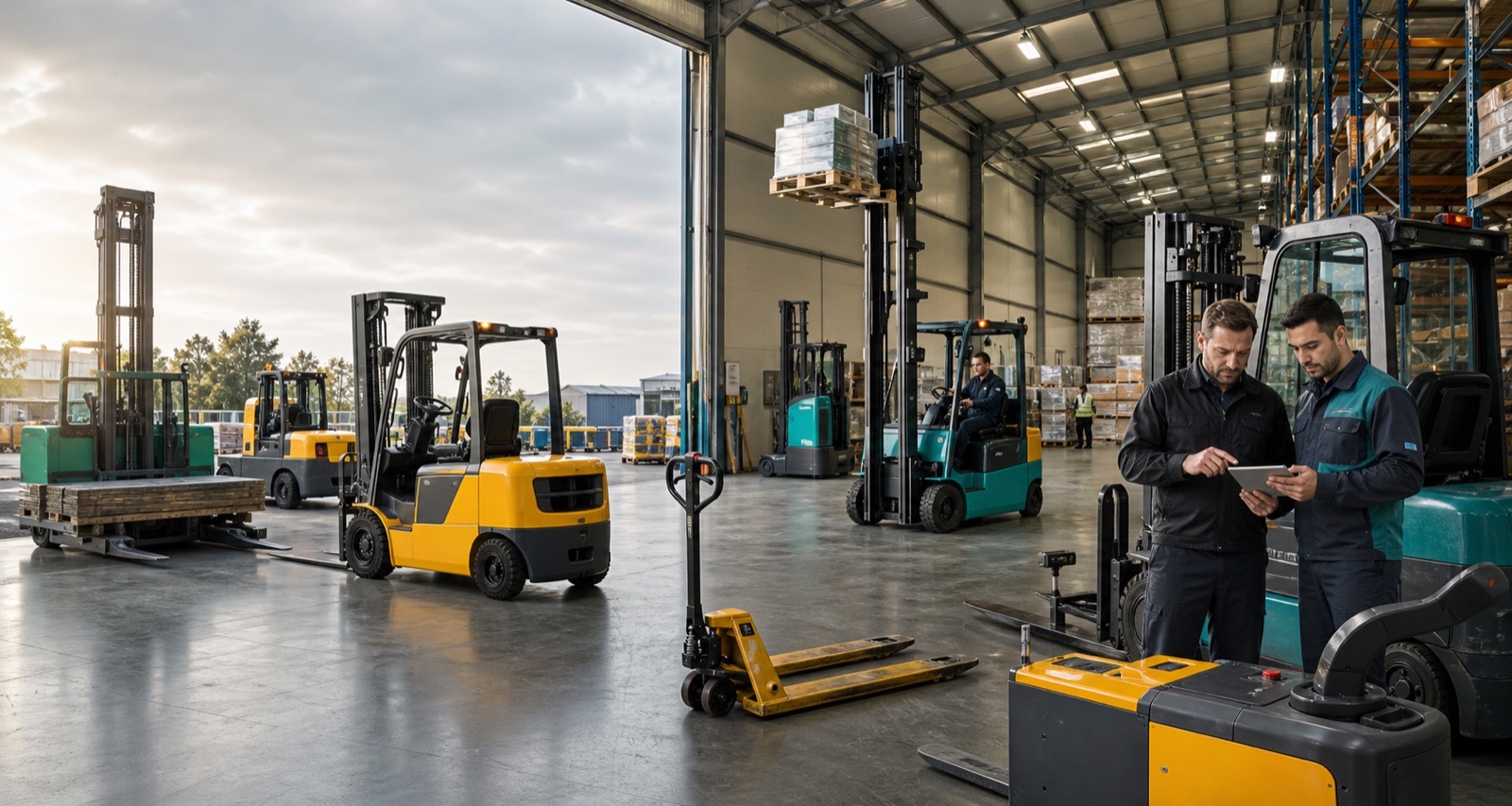
Understanding forklift attachments matters because it can change availability, safety, cost or compliance in a real forklift operation. This guide explains the practical point a manager needs before a simple specification detail turns into the wrong truck, unsafe load movement or avoidable operator uncertainty.
Short answer
Forklift attachments are a specification detail that decides whether a forklift can safely do the job, not just whether it can physically reach or move a pallet. For forklift attachments, the basics question is whether managers understand the term well enough to choose, compare or challenge the truck setup. For forklift attachments, this becomes a management decision once load-centre variation across awkward pallets, fork length and support beneath the pallet and pallets wider or longer than the standard load have been checked together.
What this means in practice
Forklift attachments affect the match between truck, load, aisle, height, surface and operator visibility. For forklift attachments, a truck can look right until the load centre, lift height, mast clearance or route constraint is checked. For forklift attachments, the basics question is whether managers understand the term well enough to choose, compare or challenge the truck setup. Keep forklift attachments practical by stating what is affected, how urgent it is and what happens next. Reviewing forklift attachments, managers can ground this question at the handover between experienced and occasional operators. For forklift attachments, they should check whether another truck doing the same task shows the same pattern, photograph the condition and record when it appears, and examine attachments used without revised rating information. Connect forklift attachments to the next operational choice and the evidence needed to defend it.
If forklift attachments is misunderstood, the site may choose a truck that is unstable, too large, under-capacity, hard to operate or unsuitable for the working area. Turn the finding on forklift attachments into one named action and a review date instead of leaving several possible responses open.
Key checks
- For forklift attachments, measure the real load, not only the pallet footprint. Record its effect on operator category for the selected truck type.
- Before forklift attachments consumes time or budget, confirm lift height, closed mast height and any doorway or racking constraints. Connect the finding to power availability across consecutive shifts.
- Using the handover between experienced and occasional operators to test forklift attachments, check aisle width, turning area, ramps and floor condition. Show whether it changes attachment compatibility and revised capacity information.
- To make forklift attachments site-specific, read the data plate with any attachment or load centre changes in mind. Use tyre and ground-clearance suitability on the full route to judge its importance.
- For forklift attachments, the person approving the next step should ask operators where visibility or clearance currently causes difficulty. Record its effect on visibility at the point a manoeuvre changes direction.
Common mistakes
For forklift attachments, treating the issue as an isolated event can hide the influence of load-centre variation across awkward pallets. Omitting evidence connected with warning devices lost in background noise also prevents a reliable before-and-after comparison.
What good looks like
For forklift attachments, the target state is a shared rule at the handover between experienced and occasional operators, supported by evidence about load-centre variation across awkward pallets, a named owner and records addressing wheel spin or grounding on ramps.
When to ask WRMH for help
For forklift attachments, involve WRMH when evidence from the handover between experienced and occasional operators remains inconclusive, the sign returns or fork length and support beneath the pallet changes the decision. For forklift attachments, share the truck identity, task conditions, previous action and evidence connected with operators avoiding a route because visibility is poor. For forklift attachments, that information helps WRMH target the relevant capability.