
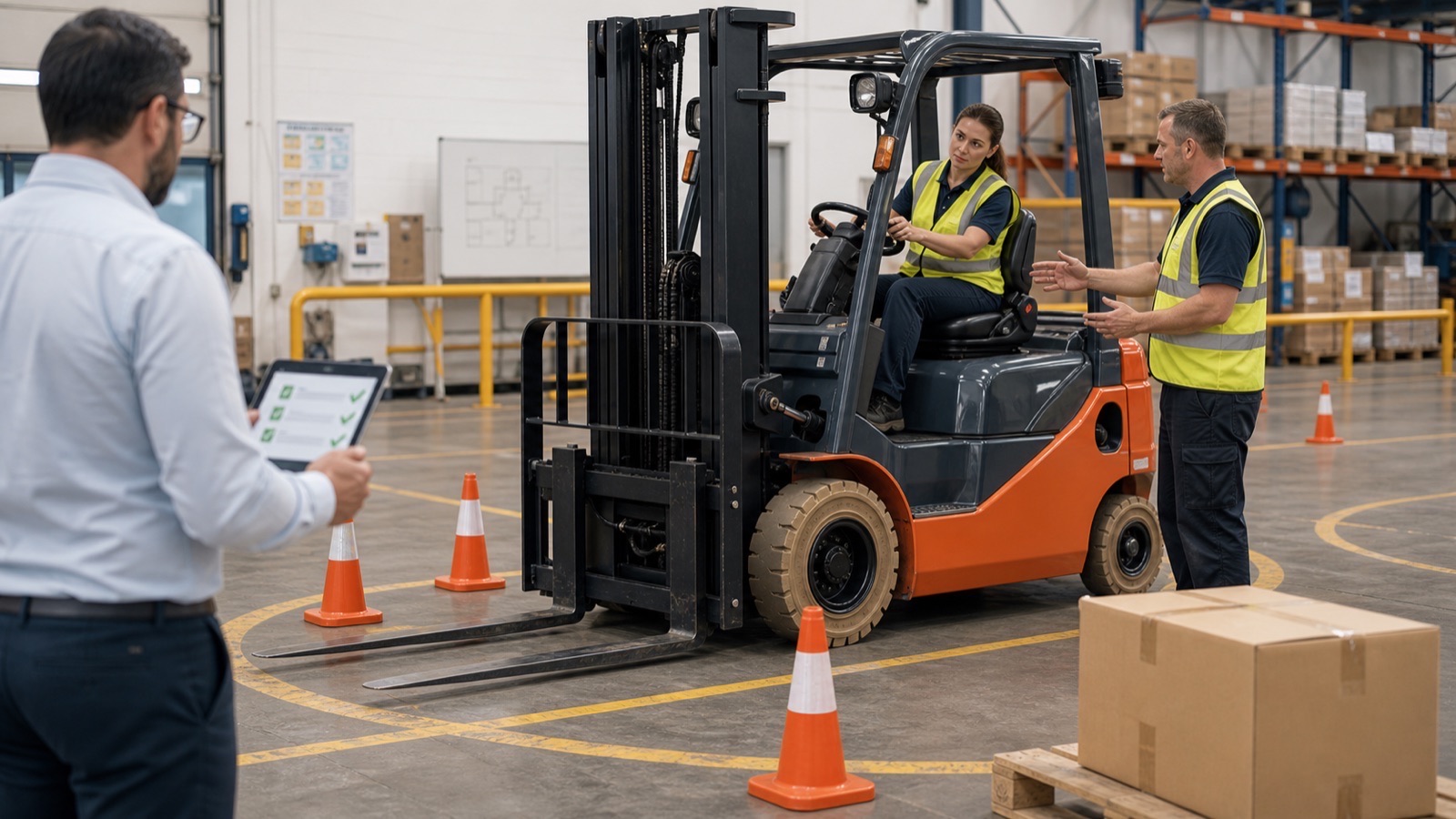
Harsh braking transfers force into tyres, load restraints, pallets and the operator before the truck stops. It may be a driving habit, but it can also be the visible response to a blind crossing, late pedestrian conflict, poor brake modulation or a workflow that leaves no safe stopping margin.
Short answer
Harsh forklift braking causes avoidable damage when abrupt stops become routine rather than an emergency response. Managers should compare stopping technique, brake condition, load stability, route visibility and time pressure. The correct action may be coaching, repair, a route change or a lower operating speed; replacing damaged goods without examining the stop leaves the cause active.
What this means in practice
A food warehouse reach truck approaches a cross-aisle hidden by temporary pallets. Operators brake sharply on most journeys because pedestrians appear late. Cases shift against the pallet wrap and the steer tyre develops flat areas. The operator action is abrupt, but visibility and staging have made it predictable.
The manager must decide whether braking performance is inconsistent, operators approach too quickly or the route needs an earlier sightline and stopping point. Observe equivalent approaches with representative loads and note where deceleration begins.
Key checks
- Record the location, load and reason given for repeated abrupt stops.
- Compare brake response and pedal modulation across similar trucks.
- Inspect tyre flat spots, shifted loads, damaged wrap and backrest contact.
- Measure sight distance and the usable stopping margin at the approach speed.
- Check whether targets or queues encourage late braking before set-down points.
Emergency braking remains necessary when danger appears. The management question is why the same emergency response is repeatedly required at a normal movement. Separate isolated avoidance from a stable operating pattern.
Load type changes the consequence. A secured dense load may remain stable while stacked cases, liquid containers or long loads continue moving after the truck decelerates. The operating standard should therefore reflect both the route and the load's response.
Common mistakes
Using telematics deceleration data without checking route context can label an operator who is avoiding a recurring hazard. Conversely, blaming the crossing while ignoring one truck's grabbing brakes delays a necessary repair.
What good looks like
Normal routes allow progressive braking with stable loads, brake response is consistent, and repeated emergency stops trigger a location review. Supervisors can identify harsh technique and environmental causes from observation. Managers can explain whether coaching, maintenance, speed or layout action produced the improvement.
When to ask WRMH for help
Ask WRMH when abrupt stops, tyre flat spots or brake complaints recur and the cause is uncertain. WRMH can inspect braking and tyre condition and relate the findings to the task, then support targeted training where technique is involved. This gives faster diagnosis and prevents mechanical and behavioural causes being confused.
observe ten approaches at the most common harsh-braking location and record where braking begins and why it becomes abrupt.