
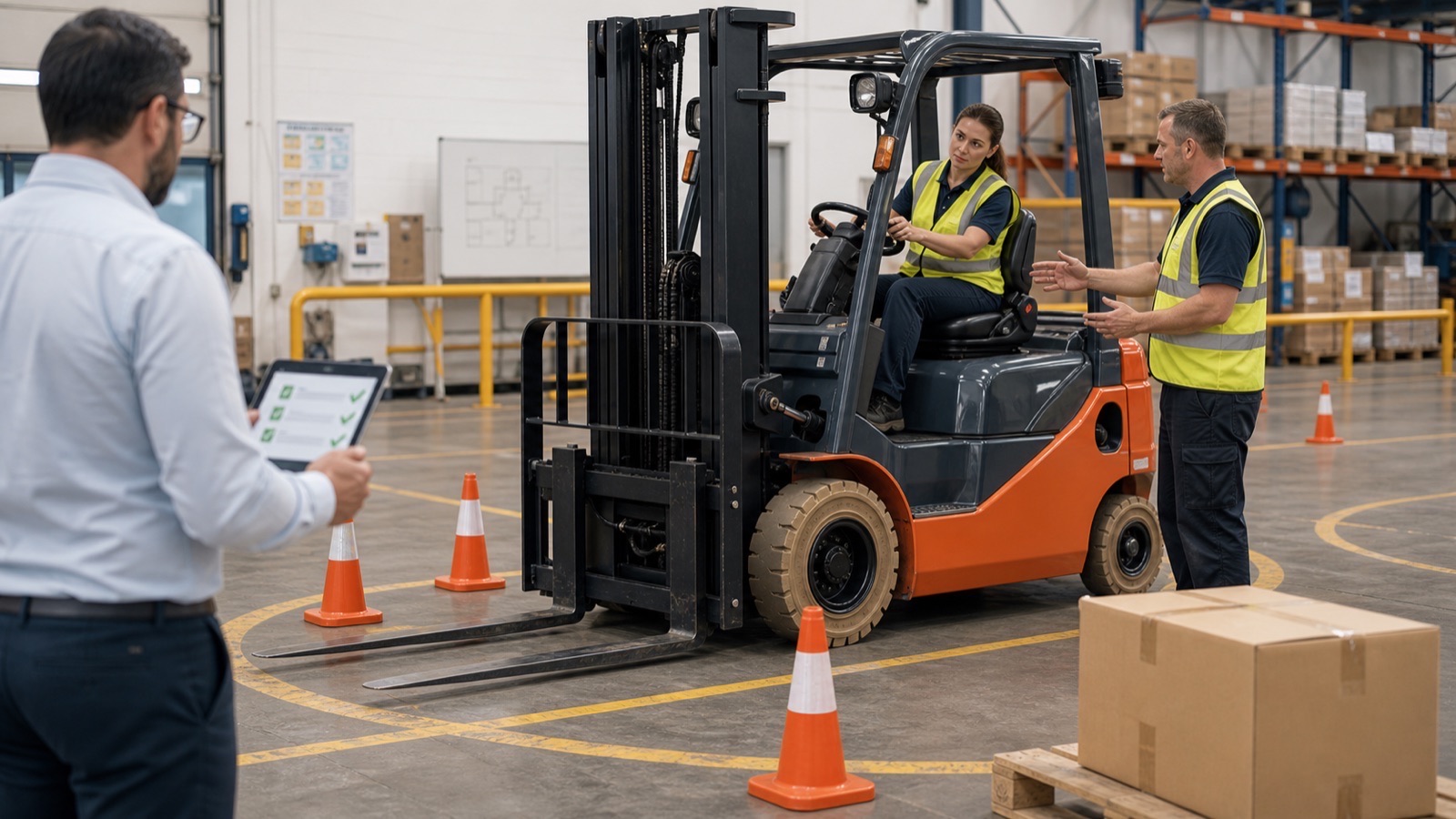
Understanding training for pre-use checks matters because it can change availability, safety, cost or compliance in a real forklift operation. This guide explains the practical point a manager needs before operators are asked to use equipment, attachments or routes that have moved beyond their current competence and record evidence.
Short answer
Training for pre-use checks cover proving that the person using the truck has the right skill, knowledge and site understanding for that specific equipment and task. For training for pre-use checks, the training question is competence for the exact truck, task, route and record managers must evidence. For training for pre-use checks, a manager can move beyond theory by checking damage patterns used to shape coaching, supervisor observations during normal production and whether different behaviour between trained and unfamiliar operators is present.
What this means in practice
Training for pre-use checks affect confidence, damage, pedestrian behaviour, pre-use checks, battery care, productivity and the manager's ability to show competence if questioned. For training for pre-use checks, the training question is competence for the exact truck, task, route and record managers must evidence. Keep training for pre-use checks practical by stating what is affected, how urgent it is and what happens next. Reviewing training for pre-use checks, the clearest evidence on training for pre-use checks may appear at the competence review after a truck, attachment or route changes. For training for pre-use checks, first check whether another truck doing the same task shows the same pattern; then separate the truck symptom from the route, load and operator conditions. Connect training for pre-use checks to the next operational choice and the evidence needed to defend it. Include post-course performance never observed in the comparison.
Weak control of training for pre-use checks can leave operators on unfamiliar trucks, records out of date, unsafe habits uncorrected and supervisors unsure who can do the job. Turn the finding on training for pre-use checks into one named action and a review date instead of leaving several possible responses open.
Key checks
- For training for pre-use checks, match the operator record to the truck category and task. Record its effect on new-starter authorisation kept distinct from induction.
- Before approving a response to training for pre-use checks, check refresher, conversion and site-specific familiarisation needs. Connect the finding to agency credentials verified before allocation.
- Using the competence review after a truck, attachment or route changes to test training for pre-use checks, review damage, near misses and hesitation as signs of skill gaps. Show whether it changes practical assessment on the relevant truck category.
- For training for pre-use checks, separate observation from assumption and keep certificates and evidence accessible for managers. Use shift cover while operators attend training to judge its importance.
- For training for pre-use checks, the person approving the next step should plan training around shifts before competence gaps become urgent. Record its effect on refresher triggers based on behaviour and evidence.
Common mistakes
For training for pre-use checks, a weak decision would treat one symptom as proof while overlooking damage patterns used to shape coaching. Without evidence about course records that omit site familiarisation, the site cannot tell whether the same mechanism has returned.
What good looks like
For training for pre-use checks, the target state is a shared rule at the competence review after a truck, attachment or route changes, supported by evidence about damage patterns used to shape coaching, a named owner and records addressing attachments introduced without conversion training.
When to ask WRMH for help
For training for pre-use checks, bring WRMH in if the site has recorded supervisors correcting the same shortcut repeatedly but still cannot settle the action. Truck identity, task detail and supervisor observations during normal production allow a more accurate and commercially controlled response.