
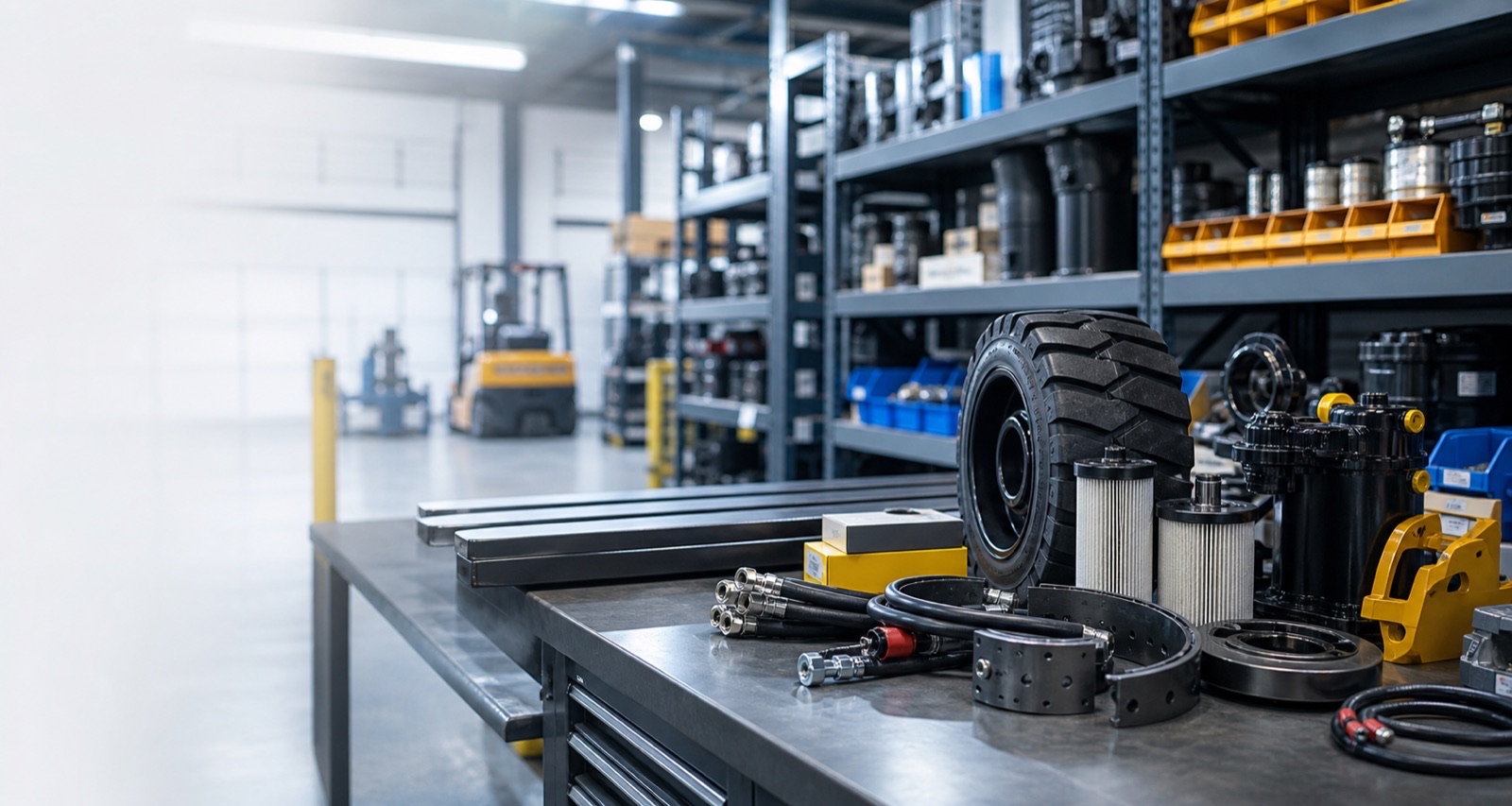
Understanding forklift wheels matters because it can change availability, safety, cost or compliance in a real forklift operation. This guide explains the practical point a manager needs before the wrong part is ordered, delivery is delayed or a self-fit repair creates another fault because the component was not identified properly.
Short answer
Forklift wheels are the contact point between the truck and the floor. Tyre compound, wheel type, wear pattern and surface condition all affect stability, comfort, traction and running cost. For forklift wheels, the parts question covers identification, quality, availability and the correct fitting route. For forklift wheels, this becomes a management decision once component markings and photographs in position, stockholding justified by failure frequency and safety-critical parts selected by price alone have been checked together.
What this means in practice
Forklift wheels change how the truck behaves on turns, ramps, yards, dock plates and debris-prone areas. Uneven wear can point to surface damage, overload, misalignment, harsh turning or a truck doing work it was not specified for. For forklift wheels, the parts question covers identification, quality, availability and the correct fitting route. Keep forklift wheels practical by stating what is affected, how urgent it is and what happens next. Reviewing forklift wheels, managers can ground this question at the repair plan where delivery time and fitting method are agreed. For forklift wheels, they should check whether another truck doing the same task shows the same pattern, separate the truck symptom from the route, load and operator conditions, and examine mixed-fleet records using informal truck names. Connect forklift wheels to the next operational choice and the evidence needed to defend it.
Poor tyre or wheel condition can increase vibration, damage components, reduce grip, mark floors, increase operator fatigue and create repeat spend if the route cause is ignored. Turn the finding on forklift wheels into one named action and a review date instead of leaving several possible responses open.
Key checks
- For forklift wheels, inspect tread, chunks, flat spots, cracking, sidewall damage and wheel security. Show whether it changes serial-number accuracy before the order is placed.
- Before forklift wheels consumes time or budget, compare wear patterns across similar trucks and routes. Connect the finding to engineer fitting needs and specialist tooling.
- Using the repair plan where delivery time and fitting method are agreed to test forklift wheels, check whether indoor, yard or mixed use needs a different tyre choice. Record its effect on delivery timing aligned with engineer availability.
- To make forklift wheels site-specific, review surfaces, debris and turning areas before blaming the tyre alone. Use safety criticality of the failed component to judge its importance.
- For forklift wheels, the person approving the next step should plan replacement before tyre condition affects safety or productivity. Show whether it changes return rights if identification evidence was incomplete.
Common mistakes
For forklift wheels, treating the issue as an isolated event can hide the influence of component markings and photographs in position. Omitting evidence connected with stock items degrading before they are needed also prevents a reliable before-and-after comparison.
What good looks like
For forklift wheels, the target state is a shared rule at the repair plan where delivery time and fitting method are agreed, supported by evidence about component markings and photographs in position, a named owner and records addressing warranty evidence lost during self-fitting.
When to ask WRMH for help
For forklift wheels, involve WRMH when evidence from the repair plan where delivery time and fitting method are agreed remains inconclusive, the sign returns or stockholding justified by failure frequency changes the decision. For forklift wheels, share the truck identity, task conditions, previous action and evidence connected with associated seals, fixings or bearings omitted. For forklift wheels, that information helps WRMH target the relevant capability.