
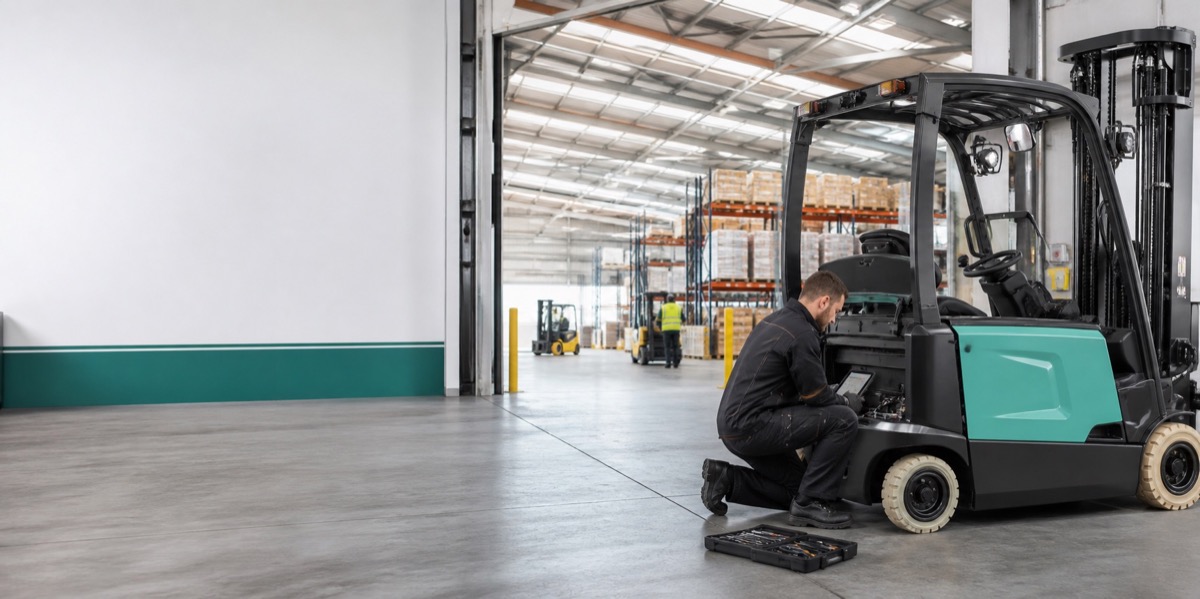
Fork heels are vulnerable when operators travel with the forks skimming the floor or fail to adjust for ramps, joints and thresholds. The resulting wear can look gradual and ordinary until one fork loses noticeably more material, catches an obstruction or no longer presents the same geometry as its pair.
Short answer
Repeated forklift fork heel wear can show that forks are travelling too low, the mast tilt is unsuitable, the floor route is uneven or operators lower the carriage before the truck has reached its set-down position. Managers should compare both forks, the route and the operating technique; wear at the heel is different evidence from tip damage caused while entering a pallet.
What this means in practice
At an engineering site, a counterbalance carries empty stillages across a doorway with a raised metal threshold. Operators keep the forks very low because the loads feel more stable, and the right fork heel clips the threshold on the return journey. Fresh scrape marks appear on the floor and one fork shows heavier underside wear. Continued travel risks weakening the fork and turning a route habit into a safety-critical replacement.
The manager needs to decide whether the answer is task-focused coaching, threshold repair, a defined travel height, mast adjustment or removing the truck from service for fork assessment. The decision should follow measurement rather than visual guesswork.
Key checks
- Compare heel thickness, underside wear and fork level across the pair.
- Map fresh floor or threshold scrape marks along the normal route.
- Observe fork clearance when laden and unladen at joints, ramps and doorways.
- Check mast tilt, carriage rollers and fork locking position for unequal presentation.
- Confirm who is authorised to assess whether worn forks remain serviceable.
A travel standard needs to be practical for the load and surface. It should define sufficient clearance without encouraging elevated travel. Supervisors should be able to recognise contact noise and new scrape evidence rather than waiting for the next scheduled service.
Common mistakes
Grinding or dressing the heel to make the forks appear even removes more material and hides evidence. Another mistake is treating both forks as acceptable because the tips align; underside loss, cracking or unequal thickness requires competent assessment.
What good looks like
Fork condition records include heel measurements and photographs, the travel route has no unexplained scrape pattern, and operators demonstrate an agreed clearance across the actual transitions. New contact is reported promptly. Managers can explain whether wear came from technique, floor condition or truck geometry and who authorised continued use or replacement.
When to ask WRMH for help
Ask WRMH when fork heels show unequal wear, fresh floor strikes appear or the site is unsure whether the forks remain safe. WRMH can inspect and measure the forks, check carriage and mast condition and relate the evidence to the route. That supports a safer stop-or-operate decision, accurate fork identification and focused training rather than replacing parts without removing the cause.
Helpful next step: photograph both fork undersides and trace every fresh scrape mark back through the route before the evidence is polished away by further use.