
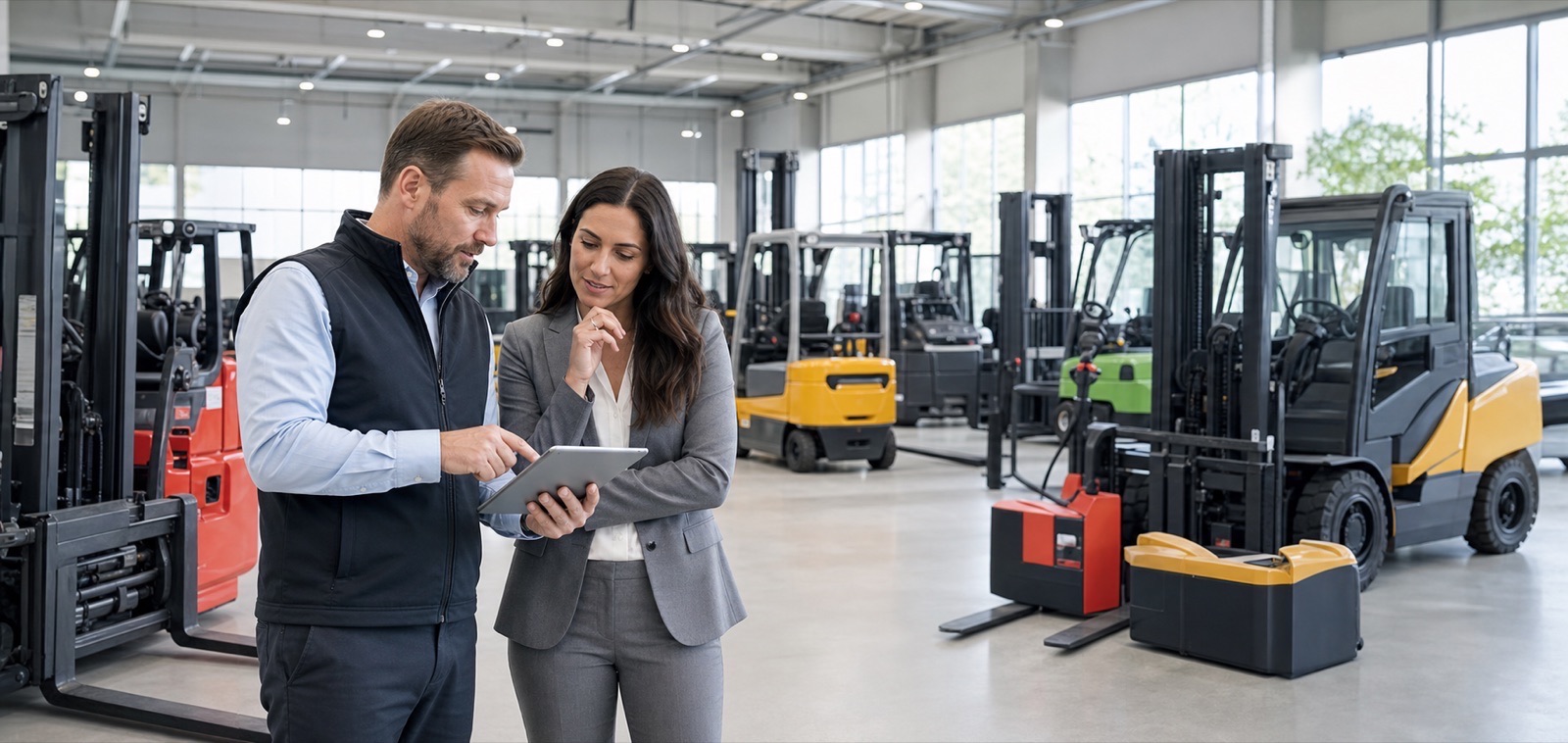
A specialist attachment can reduce crushing, puncture, instability or manual rehandling, but it also changes capacity, visibility, maintenance and competence requirements. The business case should prove that the load problem is one the attachment can control.
Short answer
A specialist attachment is justified when a defined load-damage pattern and handling cost exceed the whole-life cost of the correctly specified truck-and-attachment combination. Managers should trial representative loads, confirm residual capacity and measure rejects, cycle time and damage before and after. An attachment is not good value if poor pallet quality or presentation remains the real cause.
What this means in practice
A paper converter handles finished reels using improvised pallet supports and standard forks. Edge damage leads to rewrapping and occasional customer credits. A suitable clamp could remove fork contact, but pressure settings, reel range, truck capacity and operator technique determine whether it prevents damage or introduces crushing. The decision needs a controlled trial, not a brochure comparison.
Calculate product loss, rework labour, extra packaging, delayed dispatch and handling time. Add attachment purchase or hire, installation, capacity implications, maintenance, examination and training. The manager then chooses trial, investment, a different pallet method or no change.
Key checks
- Define the exact damage location, load type, frequency and customer consequence.
- Confirm residual truck capacity and load centre with the attachment fitted.
- Test visibility, aisle clearance and hydraulic compatibility on the live route.
- Measure reject rate, rehandling time and damage severity during a representative trial.
- Include maintenance, inspection and competence costs in the comparison.
One attachment may not suit every product size. Establish the operating envelope and how the operator verifies settings before each load. Where variation is high, a revised pallet or handling process may deliver better control than specialist equipment.
Set a decision date after the trial and agree the minimum improvement required. Without a threshold for reduced rejects or rehandling, a technically successful demonstration can drift into an investment that never proves its commercial value.
Common mistakes
Buying an attachment because it handled one demonstration load ignores the extremes of normal production. Another mistake is counting product write-off but excluding reduced truck capacity or extra movements, which can change the commercial result.
What good looks like
The approved load range, settings and residual capacity are documented, operators demonstrate correct use, and maintenance and examination responsibilities are assigned. Damage and rework are measured against the baseline. Managers can explain why the attachment is better value than changing packaging, pallet presentation or handling sequence.
When to ask WRMH for help
Ask WRMH when product damage is repeatable but the right handling method is uncertain. WRMH can assess the truck, load, route and available attachment options, arrange a suitable equipment route and connect it to operator training. This improves truck suitability and gives managers evidence for a whole-life cost decision.
select the three most frequently damaged load variants and cost a representative trial around those, not the easiest product to handle.